
This article examines the leading cigar brands and manufacturers from multiple angles: historical provenance, agricultural and factory practices, signature products, market dynamics, and sensory consequences for the reader, with a technical and descriptive approach.
Framing the Field: Market Context and Public-Health Signals
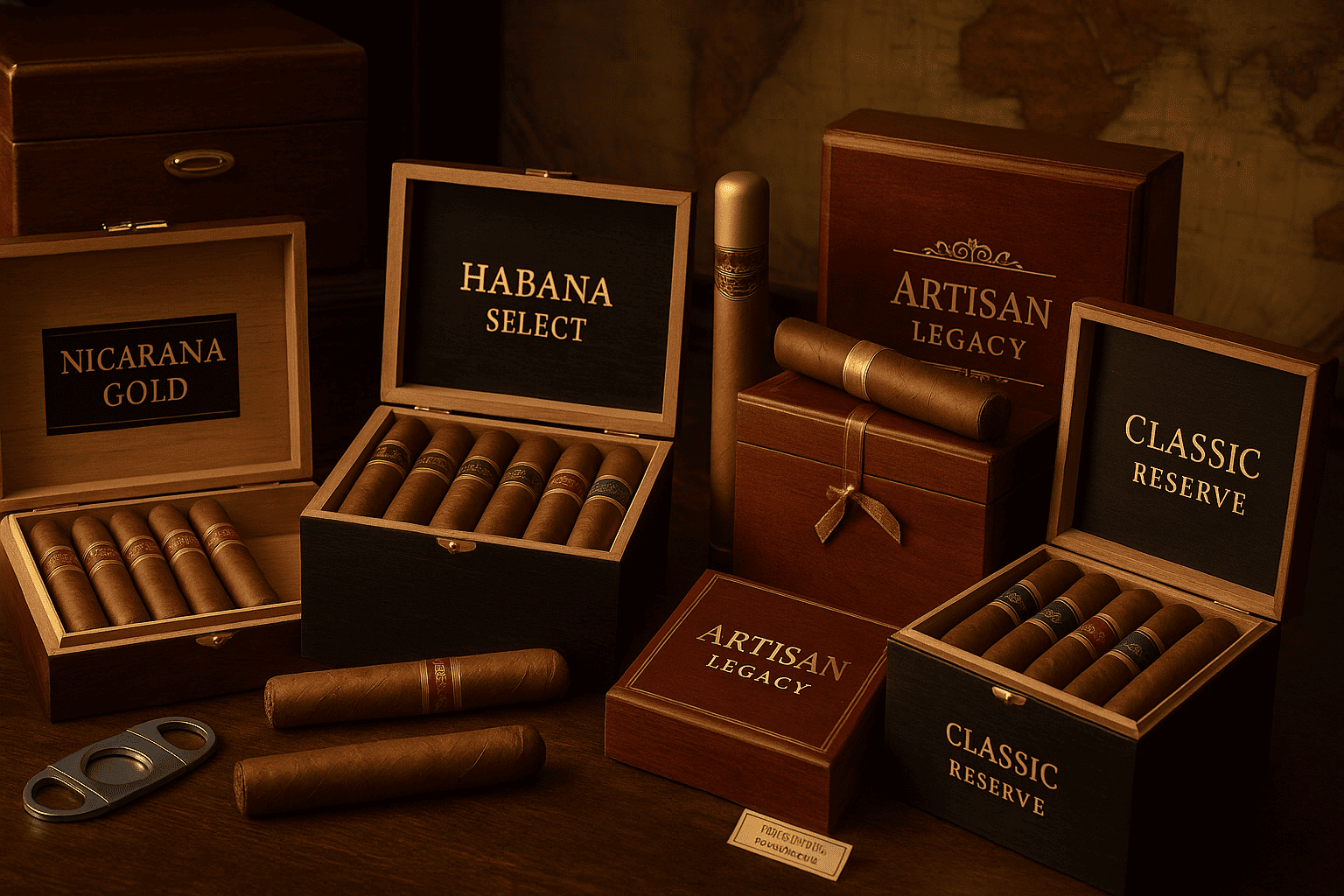
Two quantitative anchors help frame why brand selection matters for producers, retailers, and consumers. The global cigar and cigarillos market was estimated at USD 54.79 billion in 2024 and was projected to reach USD 102.17 billion by 2033, with a compound annual growth rate reported as 7.2% for the 2025–2033 interval. That market-scale number gives context to investment in premium lines, limited editions, and distribution infrastructure. (Grand View Research — Cigar & Cigarillos Market).
On public-health metrics, national surveillance reports indicate that combustible tobacco products remain widely used in the United States. The Centers for Disease Control and Prevention reported that, for 2021, cigar use comprised a measurable share of tobacco consumption in adults; those prevalence figures inform policy, retail compliance requirements, and product stewardship. (CDC — Tobacco Product Use Among Adults, 2021).
Those two data points place brand strategies against a backdrop of expanding commercial opportunity and increasing regulatory scrutiny. The practical effect is visible in how leading manufacturers allocate resources for agricultural control, vertical integration, quality assurance, and market segmentation.
Criteria for “Top” Brands and Manufacturers
The rubric used here to nominate and analyse leading brands includes:
- Heritage and provenance. Historical continuity of seed lines, farms, and factory practice.
- Vertical integration. Control of seed, cultivation, fermentation, and finishing at scale.
- Sensory identity. Distinctive, reproducible flavor signatures that can be mapped to wrapper, binder, and filler choices.
- Critical reception and awards. Independent ratings, contest results, and placement in recognized lists.
- Commercial reach and innovation. Distribution footprint, premium-limited editions, and novel processes (for example, infusion or specialized fermentation protocols).
The sections below apply this rubric to a set of manufacturers and marques that are prominent in reviewer rankings and trade reporting. The selection is not exhaustive; it is representative of influential producers across geographies and manufacturing models.
Habanos S.A. and the Cuban Tradition
Habanos S.A. is the Cuban state-owned commercial entity that manages many of the island’s classic marques. Among the best-known names are Cohiba, Montecristo, Romeo y Julieta, Partagás, and H. Upmann. Cuban brands are historically important in the modern vocabulary of premium cigars because the Cuban terroir, post-harvest practices, and factory traditions established early benchmarks for flavor and form.
The Montecristo brand’s historic note is explicit: “Its name originates from the novel ‘The Count of Monte Cristo’ by Alexander Dumas.” That origin story links literary culture, factory practice, and branding in a single phrase. Habanos maintains documentation about brand histories and the factory vitolas associated with them. (Habanos).
The Cohiba line has generated modern auction-level valuations for certain rare sizes and artisan-limited releases. Reports of record humidor auctions during Havana festivals provide evidence of collector demand and the pricing stratification inside the Cuban segment. For example, recent reportage described a Behike humidor sale that set a new auction record per cigar. Such market events illustrate how scarcity, unique leaf types (for example, Medio Tiempo primings), and brand prestige convert into extraordinary valuations.
From an operational perspective, Habanos’ model differs from commercial firms outside Cuba. The Cuban system retains a closer linkage to historical factory names, torcedor skill traditions, and vertically concentrated designation of farm regions such as Vuelta Abajo. Those structural differences shape the sensory range of Cuban cigars and influence international comparison.
Arturo Fuente: A Multigenerational Dominican Benchmark
Arturo Fuente’s corporate narrative emphasizes family continuity and time-managed leaf maturation. The company presents its history as a long arc: “Fuente & Company was established in 1912, Arturo Fuente would have never dreamed his passion for cigars would become a global benchmark for the cigar industry.” (Arturo Fuente).
Operationally, the Fuente organization maintains a mix of proprietary farms, specialized wrapper programs, and graded aging houses. The Fuente Fuente OpusX line exemplifies the firm’s strategy of producing a terroir-driven, Dominican-wrapped puro capable of sustaining both collector-interest and consistent sensory performance. The company’s production practices—long-term storage, controlled fermentation, and selective wrapper harvesting—yield cigars with age potential and pronounced structural balance.
For the consumer, a practical implication of Fuente’s model is that certain limited-release items require patience and storage discipline. Retailers and collectors typically recommend acquiring multiple sticks for rotation testing, and documenting aging trajectories. The brand’s long-run investments in wrapper agriculture create options for both immediate consumption and cellar ageing.
Padrón: Nicaraguan Vertical Integration and Consistency
Padrón Cigars offers a contrastive case because of its control-oriented approach to leaf sourcing and manufacturing. The company’s public materials present a compact founding statement: the firm was established by José O. Padrón in 1964, and the brand’s narrative emphasizes family stewardship and farm ownership across Nicaragua. (Padrón).
Technical features of the Padrón model include in-house leaf selection and a high degree of consistency in fermentation schedules. The firm’s products range across numbered releases and anniversary editions, with a recurring theme of long firebox-style fermentation and slow, measured maturation. Those production choices create a characteristic palate profile frequently described as cocoa, espresso, and predictable structural backbone in mid- and full-bodied lines.
For blenders and tasters, Padrón serves as an instructive comparator when testing the impact of controlled Nicaraguan ligero versus blended filler mixes. Its vertical integration reduces variance across boxes, which benefits weighted sensory studies and collector confidence.
Davidoff: European Luxury and an Emphasis on Time
Davidoff’s corporate history is rooted in a Swiss retail origin that expanded to a worldwide production and distribution model. The company frames its approach as time-oriented and terroir-aware. One marketing formulation states: “The cigar story follows a tobacco seed on its journey from being sown in the Dominican Republic to becoming a finished Davidoff cigar.” (Davidoff).
Technical hallmarks of Davidoff products include selection of high-grade Dominican and Ecuadorian leaves, long resting periods, and careful finishing that privileges subtle aromatic nuance over overt spice. Davidoff’s premium lines tend to target mature consumers who value craftsmanship, balance, and the capacity of a cigar to reward slow, attentive tasting.
Drew Estate: Innovation, Branding and the Nicaraguan Turn
Drew Estate provides a different set of organizational lessons. The company’s origin story emphasizes a small start and radical brand innovation. Public company narratives recount the founders’ small kiosk operation and the subsequent move to Nicaragua to assume production at scale. Drew Estate’s rise demonstrates how brand differentiation—craftsmanship mixed with disruptive marketing—can translate into global relevance. (Drew Estate).
From a product standpoint, Drew Estate is known for bold initiatives: Liga Privada and experimental small-batch releases. The company assigns experienced buncheros and rolleras to dedicated production rooms, and emphasizes an artisan ethos in its high-end lines. Drew Estate’s portfolio strategy includes mainstream approachable lines, boutique limited editions, and novelty-centered brands designed to attract new categories of consumers.
For sensory practice, Liga Privada and other Drew Estate lines show how aggressive fermentation, rich Maduro wrappers, and heavy ligero can create concentrated, long-duration smokes. The company’s approach is therefore instructive about the tradeoffs between immediate intensity and long-term harmony.
Oliva, My Father, and Other Nicaraguan Innovators
Nicaragua has matured into an important source region that supplies both filler and wrapper leaf for many prominent manufacturers. Brands such as Oliva and My Father demonstrate distinct strategies. Oliva’s development traces a family arc back to agricultural origins in Cuba and the later establishment of significant production capacity in Estelí. Oliva’s Serie V and Melanio lines have achieved critical recognition for the interplay of Nicaraguan ligero and Ecuador-seed wrappers. (Oliva).
The My Father brand, built by the Garcia family, is notable for a seed-and-fermentation focus and for producing blends that emphasize pepper, cedar, and a particular vegetal backbone. Those products are often used as reference points in tastings when the investigator seeks to attribute perceived spice to specific priming or fermentation choices. (My Father Cigars).
My Father and Oliva lines illustrate the flexibility of Nicaraguan agriculture across filler primings and wrapper programs.
Ashton, Padron, Rocky Patel, and Brand Positioning
Several brands illustrate the diversity of business models in the premium segment:
- Ashton. A brand built on Dominican craftsmanship with an emphasis on smooth, restrained flavor architecture. Ashton’s market position emphasizes consistency and accessible luxury. (Ashton).
- Rocky Patel. A brand with aggressive global marketing and a wide array of lines that range from mild to full-bodied. The firm’s portfolio strategy places emphasis on new releases, collaborations, and a presence across price tiers. (Rocky Patel).
- Padrón. Noted earlier for vertical control and aged Nicaraguan tobaccos. (Padrón).
Each of these brands has a distinct market proposition. The practical consequence is that a retailer needs to calibrate stock by consumer base: some customers prefer restrained Dominican pures; others seek Nicaragua-driven intensity; others prefer novelty and limited releases.
La Flor Dominicana and Boutique Craftsmanship
La Flor Dominicana represents an artisan-driven model with thick, unconventional ring-gauge offerings and innovative vitolas. The brand’s blending philosophy relies on less-common wrapper choices and farm-sourced filler elements. That approach demonstrates how boutique makers push format boundaries and recalibrate consumer expectations for body and time-to-smoke. Retailers and collectors who focus on vitola innovation often allocate shelf space to boutique lines for their differentiation potential. (La Flor Dominicana).
Joya de Nicaragua, General Cigar, and Contract Manufacturing
Joya de Nicaragua occupies a historically important place as one of the oldest Nicaraguan brands and a reference for naturally spicy, fuller-bodied profiles. (Joya de Nicaragua).
General Cigar Company represents a commercial factory model with a broad brand portfolio spanning machine-made cigarillos and premium handmade lines. Some companies operate contract manufacturing for other labels. Observing these operational models clarifies the distinction between vertically-integrated family growers and distribution-oriented conglomerates. (General Cigar).
What “Top” Means in Sensory Terms
From a tasting and blending perspective, top brands tend to excel along several reproducible dimensions:
- Consistency across batches. Low between-box variance indicates disciplined agriculture and controlled fermentation.
- Construction predictability. Even draw, stable ash, and straight burn lines reflect factory quality control.
- Evolutive complexity across thirds. A cigar that changes in predictable and pleasant ways across the initial, middle, and final phases demonstrates careful filler distribution and wrapper selection.
- Aging potential. Some brands produce cigars that integrate and improve over years in proper storage.
Critics and tasters use standardized scoring protocols to compare these criteria. Publications and rating bodies provide visibility into which brands meet these technical thresholds, and those assessments feed collector demand.
Limited Editions and the Economics of Scarcity
Limited-edition runs, festival releases, and humidor-only issues are a deliberate part of many top brands’ strategies. Limited production can be justified by:
- Use of rare leaf types (for example, specific primings such as Medio Tiempo).
- Extra-long fermentation cycles or multiple re-fermentations.
- Collaborative finishes with barrel- or wood-aging steps.
The auction evidence for rare Cohiba Behike sizes highlights how scarcity plus heritage convert to collectible valuations. For practitioners and collectors, that observation implies a trade-off: rare items can be valuable for a cellar but risky for those who prefer broad-run reproducibility.
Quality Control: Practices That Differentiate Manufacturers
Manufacturers implement specific controls to reduce variance and improve yield:
- Genetic selection and seed tracing. Using known seed lines reduces agronomic variance and enables predictable wrapper yields.
- Staged fermentation logs. Logging the temperature and humidity for each fermentation stage allows replicateable development of Maillard-chemistry-derived aromatics.
- Dedicated rolling rooms. High-end lines are often produced in dedicated rooms with recurrently trained torcedores to maintain consistent bunching and draw. Drew Estate and Padrón are examples of firms that mark specific rooms for marquee lines.
- Retention sampling. Producers sample from production runs to test draw, burn, and volatile profiles before release.
Those operational practices reduce outlier production and support the reputational capital of top brands.
Brand Innovation: New Processes and Marketing Strategies
Innovation occurs on multiple vectors: fermentation techniques, infusion and barrel-aging protocols, box-pressing and vitola design, and marketing. Some firms have invested in barrel-aging experiments that place cigars in used spirit barrels for weeks or months so the tobacco matrix can absorb vanillins and lactones. Other firms focus on brand narrative, limited releases, and boutique packaging. The commercial effect is segmentation: traditionalists may favor established lines and repeated calibers; novelty-seekers patronize limited editions and flavored experiments.
Distribution, Age Verification, and Retail Compliance
A final operational topic concerns distribution and compliance. Retailers selling major brands must handle three tasks:
- Inventory rotation and humidification. Premium brands demand proper humidity control to preserve intended flavor and combustion.
- Age verification. The growth in flavored and premium product lines has amplified regulatory attention on marketing and youth access. Federal-level proposals addressing characterizing flavors in cigars reflect policy pressure. (CDC — Tobacco Product Use Among Adults, 2021).
- Product education. Retail staff benefit from training on brand provenance and expected palate profiles so they can match consumers to appropriate offerings.
Those distribution practices influence whether a brand’s promise is realized at the point of consumption.
Comparative Tasting Methodology for Brands
A reproducible tasting protocol yields comparable results across brands and batches. The practitioner should control for:
- Sample selection. Choose three sticks from different boxes of the same line to estimate between-box variance.
- Standardized storage. Equalize RH/T for at least two weeks at a common target, typically around 65–70% RH and 68–70°F.
- Three-phase tasting. Record initial third, middle third, and final third separately, including retrohale notes if permitted by local policy and personal practice.
- Controlled cadence. Maintain a roughly 45–60 second puff cadence to moderate combustion temperature.
- Objective metrics. Note draw resistance, ash cohesion, and burn-line correction frequency.
Applying that methodology to different brands clarifies whether perceived differences arise from blend design or from production variance.
Brand-Level Risk and Long-Term Considerations
Brand risk analysis can inform purchasing and collecting decisions:
- Supply-side risk. Wrapper shortages, disease pressure, or climatic volatility can drive temporary discontinuities in production.
- Regulatory risk. Product standards about flavoring or characterizing additives can force reformulation or limit market access.
- Reputational risk. Quality lapses or public health scrutiny can shrink distribution channels and demand.
Buyers and retailers should map those risks against intended use—immediate consumption, cellar-age, or speculative collecting.
Representative Quotes and Source Anchors
The analysis above builds on primary-material reporting and company documentation. Representative anchors include:
- The market report that estimated USD 54.79 billion in 2024 for the global cigar and cigarillos market and published a USD 102.17 billion projection for 2033. (Grand View Research — Cigar & Cigarillos Market).
- National prevalence figures for cigar use documented by the Centers for Disease Control and Prevention for 2021. (CDC — Tobacco Product Use Among Adults, 2021).
- Company provenance statements such as Arturo Fuente’s historical note: “Fuente & Company was established in 1912, Arturo Fuente would have never dreamed his passion for cigars would become a global benchmark for the cigar industry.” (Arturo Fuente).
- Brand-history material for Montecristo as presented by Habanos: “Its name originates from the novel ‘The Count of Monte Cristo’ by Alexander Dumas.” (Habanos).
- Operational profiles such as Drew Estate’s account of its foundation and move to Nicaragua, and Padrón’s founding statement and emphasis on family stewardship. (Drew Estate), (Padrón).
- Coverage of recent high-value auction events associated with Cohiba Behike releases.
Those citations give readers a path to primary information for each of the brand-level assertions above.
Practical Guidance for the Consumer, Retailer and Collector
- Match brand to intent. Choose lines with documented aging potential for cellaring. Choose consistent-production brands if reproducibility is the priority.
- Sample across vitolas. Prefer to sample at least two vitolas from a brand to detect format-dependent changes.
- Document storage and tasting. Maintain a ledger noting lot numbers and box dates to detect drift in production over time.
- Check provenance. For high-value limited releases, require proof of chain-of-custody and original packaging where possible.
- Monitor policy. Track regulatory announcements that might affect characterizing flavors, pack sizes, and age-verification enforcement. (CDC — Tobacco Product Use Among Adults, 2021), (Grand View Research).
These practices reduce surprise and enable constructive dialogue with retailers about expected performance.
Final Considerations
The landscape of top cigar brands and manufacturers combines heritage, agricultural skill, manufacturing discipline, and commercial design. Each brand embodies a set of choices about leaf genetics, production control, fermentation, vitola engineering, and market positioning. For practitioners who value repeatable sensory analysis, the recommended path is methodical: standardize storage conditions, implement three-phase tastings, sample across vitolas, and consult company documentation for provenance and production notes.
Actionable steps for immediate application:
- Use producer web materials and authoritative market reports to set expectations for price and availability. (Grand View Research), (Davidoff).
- Implement controlled comparative tests when evaluating two or more brands for purchase or cellar entry.
- Require age and provenance documentation for high-value limited releases that are intended for collection or resale.
The best outcome for the serious user—consumer, retailer, or collector—is a clear mapping between brand promise and sensory reality. That mapping derives from disciplined testing, reference to primary sources, and ongoing attention to agricultural and regulatory developments.