
A cigarette lighter is more than a tool; for the cigarist it functions as an instrument that shapes first impressions. The act of bringing flame to tobacco determines how volatile aromatics open, whether sugars and oils scorch, and ultimately how the cigar’s architecture is revealed to the palate. This article examines lighter types, fuel chemistry, practical lighting technique, maintenance practices, and situational selection—each treated with technical precision and sensory awareness—so that readers understand how the choice and use of a lighter influence everything from construction-driven burn behavior to the experience of a cigar’s final third.
Why the lighter matters
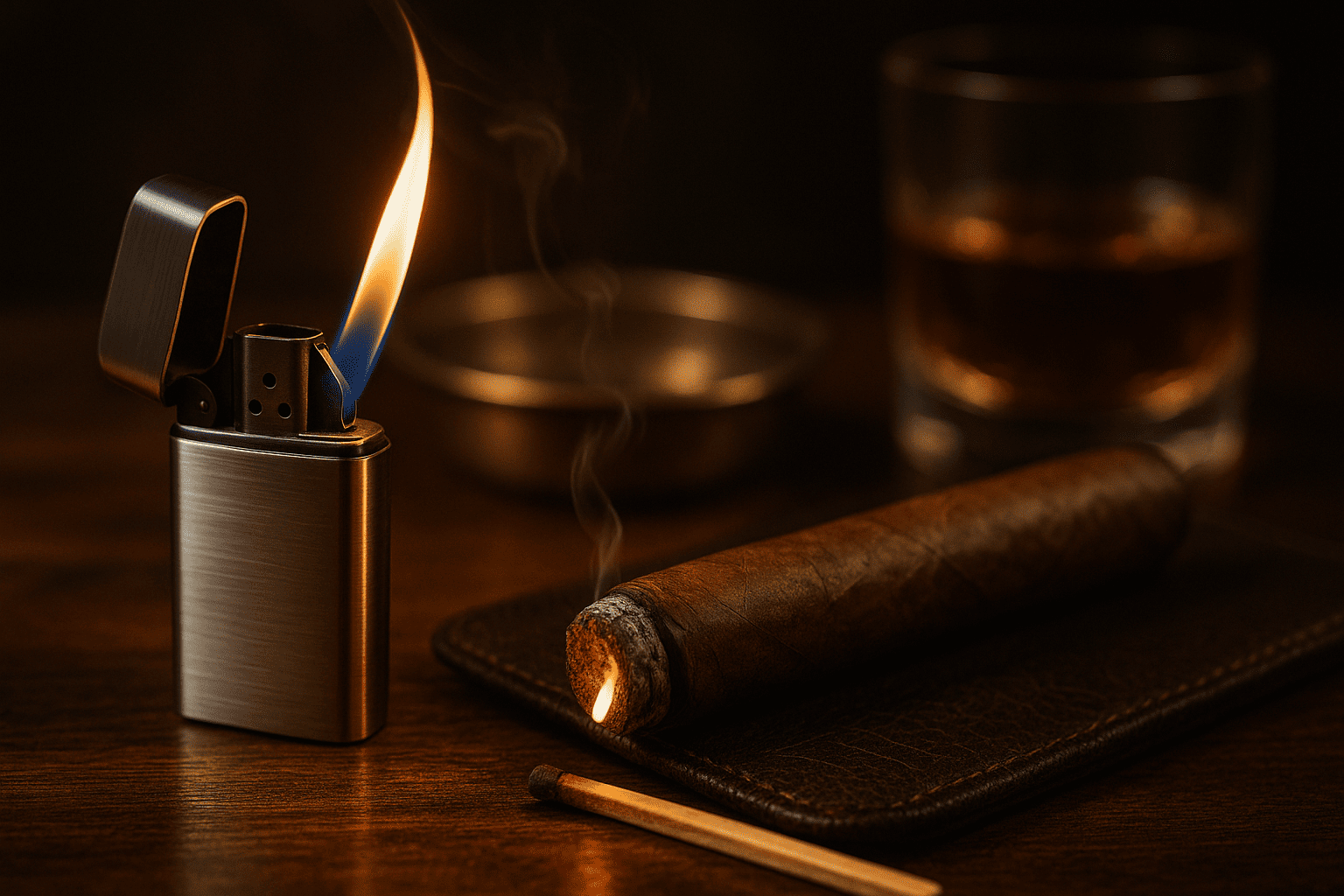
Heat is extraction. Excess heat applied at ignition severs volatile aromatics and produces hot, acrid smoke; insufficient or uneven heat produces tunneling and prolonged relights. Cigar editors underline the central technical objective plainly: “Cool smoke is the goal of a good light. To achieve this end, never let the cigar touch the flame.” That guidance captures the balance of restraint and control that distinguishes competent lighting. Cigar Aficionado — How To Light A Cigar
Fuel chemistry is consequential because additives and combustion products travel into the burning tobacco. For that reason, mainstream tobacconists and glossaries recommend butane-powered lighters—“be sure to use a butane-powered lighter … as lighters that run on lighter fluid can taint your cigars with a foul flavor.” The clean combustion of refined butane minimizes off-notes at the foot. Cigar Aficionado — Fuel and Lighting Guidance
Types of cigar lighters and their functional profiles
Lighters fall into three practical categories for cigarists: soft-flame (classic), torch/jet-flame (butane torch), and matches/spills (wood-based lighting). Each serves a purpose.
- Soft-flame lighters. These produce a yellow, gas-rich flame with gentler heat. They allow patient toasting of the foot and are preferred for ritual lighting when wind is not a factor. Trade editorialists note that soft flames “avoid the undesirable charred notes of a torch gone wrong,” and they are favored for situations where control and a measured roast matter. Cigar Aficionado — Lighting Techniques
- Torch / Jet-flame butane lighters. These produce high temperature, focused flames and are the default in windy conditions and for large ring gauges. Torch lighters are efficient and fast but demand discipline: the intense heat can scorch sugar compounds on the foot if applied indiscriminately. Still, tabletop and pocket torch models from reputable manufacturers offer adjustable flame and multiple jets for controlled, repeatable ignition. Industry lists and buyer guides identify torch lighters as the most practical choice outdoors.
- Matches, cedar spills, and wood-based flames. Long wooden matches and cedar spills burn at lower temperature and are often cited by purists for their aromatic contribution and gentler thermal profile. They require practice and time—two or three matches are sometimes necessary—and they are not always practicable in open, gusty conditions. Experienced users value them for the ritual and the lack of chemical byproducts associated with some lighter fuels.
How to select a lighter: functional checklists
Choosing a lighter is an exercise in matching need to environment and technique. Consider these vectors.
- Fuel purity. Select butane-filled lighters from reputable brands and purge any entrained air after recharge. Avoid naphtha/fluid lighters for premium cigars. See fuel guidance.
- Flame control. Adjustable flame height allows dialing down intensity to prevent scorching; multi-jet models provide redundancy in wind.
- Ergonomics and reliability. The lighter should feel balanced and offer consistent ignition. A striker mechanism that requires minimal force preserves the ritual of toasting.
- Maintenance and filling. A quality butane, high-grade refill, and periodic purging reduce soft-start issues and maintain combustion quality. Manufacturer guidance for Xikar and Colibri emphasizes proper filling technique and occasional cleaning. Xikar · Colibri
Lighting technique: practical, repeatable steps
Technique is as decisive as equipment. The following sequence encapsulates best practices and incorporates the phrases that govern a refined approach.
- Cut and inspect. Use the best cigar cutting methods for the vitola—straight guillotine for Robusto/Toro, V-cut for concentrated flavor, and punch for tighter draws. A clean cap prevents tearing that will distort draw and airflow.
- Toast the foot. Before introducing sustained flame, practice how to toast a cigar: hold the foot above the flame and rotate slowly so edges char uniformly. Toasting opens the oils without overheating the center.
- Light evenly. Proceed to the primary ignition using how to light a cigar evenly technique: rotate the cigar slowly while applying the flame close enough to encourage smolder but not touch. Build a consistent cherry around the circumference. This step reduces the need for relights and helps maintain cigar burn line.
- Establish a measured draw. Employ proper cigar draw technique and smoke with restraint: draw into the mouth and taste, then exhale without inhalation—practiced smokers emphasize smoking a cigar without inhaling to isolate aroma and limit harshness. Controlled puffs in sequence protect the palate and heat profile.
- Manage rhythm. Use cigar puffing rhythm tips: slow, spaced puffs (roughly one every 30–60 seconds) promote cool smoke and preserve flavor; the cadence supports maintenance of the burn line and reduces the need for touch-ups.
The skillful application of these steps reduces thermal shock at the foot and maximizes the fidelity of flavor extraction.
Practical maintenance: keeping a lighter in serviceable condition
A well-maintained lighter is a predictable lighter. Key tasks:
- Fill with premium butane and purge after refilling — air pockets and contaminants in the fuel port produce sputtering and inconsistent flame. Manufacturers recommend high-purity butane to preserve ignition stability.
- Adjust and test flame height before use. A too-high flame concentrates heat; a too-low flame risks incomplete ignition and uneven draw. Torch lighters often include fine adjustments—learn them.
- Periodically clean jets and ignition surfaces. Residue and debris reduce efficiency and can alter flame shape. Follow the maker’s maintenance instructions.
These small investments in maintenance prolong life and protect flavor.
Contextual choices: when to pick soft flame, torch, or match
- Indoors and ceremonial tasting. Soft-flame lighters or matches suit tasting panels and sensory sessions where a slow roast highlights nuance.
- Outdoors or windy conditions. Multi-jet torch lighters provide reliable ignition and consistent performance where ambient wind would collapse a soft flame.
- Large ring gauges. Wide-footed cigars often benefit from a larger, more distributed flame; a tabletop with adjustable jets or a two/three-jet pocket torch simplifies even lighting.
Selecting the right tool for conditions preserves ritual dignity and sensory accuracy.
Sensory consequences of lighting choices
The appearance of the foot after lighting yields information: a uniform gray ash and a steady ember indicate a properly lit cigar; layered black or a burnt surface suggests the foot was overheated. Maintaining cigar burn line across the first third reduces thermal stress and preserves the evolution of flavors from delicate aromatics to deeper, tertiary notes.
If a torch is used aggressively at the foot, sugars will caramelize and then char, which can transiently exaggerate sweetness before retreating into bitterness. Matches and soft flames promote a gentler unveiling of oils and aromatics and often produce a cooler initial smoke that gives more immediate retronasal feedback. These experiential differences explain why many tasters prefer toasting before burning and why they attend to cigar ash handling tips and the burn line as part of the evaluation.
Safety and etiquette
Respect for safety protects others and the ritual. Keep hands and garments clear of flame; blow out used matches fully and place them in an ash-safe container. For shared environments, be mindful of ventilation and non-smokers’ presence. Etiquette also covers presentation: lighting for another is a courteous gesture; executing the lighting with deliberation signals respect for the cigar and for company.
Market context and product selection guidance
The market for lighters spans disposables, premium soft-flame models, torch pocket lighters, and tabletop units. Consumer gear guides and editorial roundups list torch models, luxury soft-flame designs, and tabletop options, showing a range of price-performance trade-offs for aficionados who balance portability, aesthetic, and reliability. Buyers make choices on the basis of ergonomics, jet configuration, flame adjustment, and the ability to accept frequent refills. Practical reviews and curated lists help identify value models for newcomers and bespoke pieces for collectors.
Putting it into practice: a short protocol for reliable ignition
- Verify lighter is properly filled and adjusted.
- Cut with the cutter appropriate to the vitola (best cigar cutting methods).
- Toast the foot for 6–12 seconds while rotating; watch for even charring (how to toast a cigar).
- Apply a brief, rotating ignition to build the cherry evenly (how to light a cigar evenly).
- Establish controlled puffs and use proper cigar draw technique; avoid inhalation—practice smoking a cigar without inhaling.
- Maintain a slow cadence and attention to ash and burn line (cigar puffing rhythm tips, cigar ash handling tips, maintaining cigar burn line).
When executed with care, this protocol stabilizes the burn and maximizes the sensory path from first aromas to lingering finish.
Final Considerations
Choosing and using a lighter is technical and aesthetic work. The right lighter, filled with high-purity butane, adjusted thoughtfully, and operated with disciplined technique, protects the cigar’s aromatic profile and supports cool smoke and a stable ember. Editorial authorities emphasize measured toasting and intentional lighting—“Cool smoke is the goal of a good light”—and recommend butane as the fuel of choice for minimizing taint. Cigar Aficionado — How To Light A Cigar
For the practitioner who values reproducibility, the task is clear: select a reliable lighter appropriate to conditions, maintain it properly, and apply disciplined lighting rituals—toast, build, draw—with attention to rhythm and temperature. Those practices reduce corrective interventions and let the cigar reveal itself in thirds, from volatile aromatics through structural midpoints to concentrated conclusions of flavor. The investment in technique and equipment returns itself in fidelity: a cleaner, truer presentation of the tobacco’s character and a more satisfying tasting arc for the smoker and for companions.