
Within the visual grammar of The Sopranos, few objects carried as much quiet weight as the cigar held by Tony Soprano. It appeared without announcement, rarely framed as spectacle, yet repeatedly positioned at moments where power settled into place. Across six seasons, cigars functioned as instruments of tempo, signaling reflection, dominance, negotiation, or unease. Their role aligned with a broader tradition of cigars in movies and TV, yet the series refined that tradition through restraint and consistency.
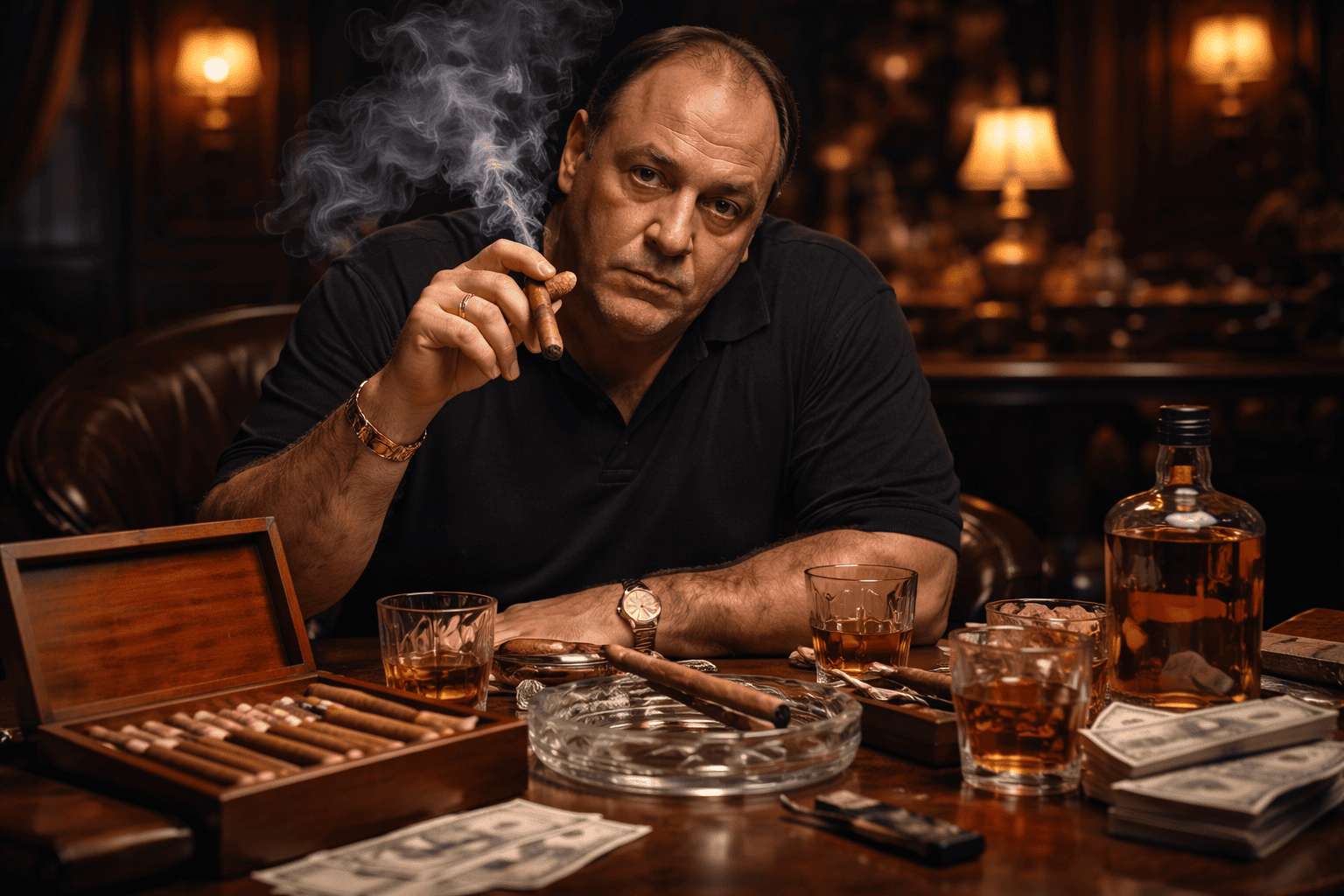
Tony Soprano’s relationship with cigars reflected a cultural moment when cigars symbolized deliberation rather than excess. The object was not decorative. It was practical, ritualized, and socially legible. Through repeated use, the cigar became a stabilizing device within scenes shaped by volatility. The result was a portrayal that resonated beyond fiction, influencing how cigars shaped celebrity image and reinforcing their place within cigars and luxury lifestyle narratives at the end of the twentieth century.
Historical Setting: The American Cigar Revival
The debut of The Sopranos in 1999 coincided with the crest of a documented cigar resurgence in the United States. According to the Cigar Association of America, U.S. cigar consumption rose from approximately 2.1 billion units in 1993 to over 4.3 billion units by 1998. The association attributes this increase to lifestyle media coverage, the growth of cigar magazines, and heightened visibility among public figures.
Source: https://www.cigarassociation.org/industry-statistics/
This context shaped how audiences read Tony Soprano’s cigar use. Cigars were no longer fringe objects associated only with vice. They had re-entered mainstream culture as markers of success, patience, and controlled indulgence. Famous cigar-smoking celebrities from earlier decades, including Winston Churchill and George Burns, already carried that symbolism. The Sopranos updated it for a suburban, late-century setting.
Tony Soprano’s Cigar as Narrative Instrument
Tony Soprano did not smoke cigars casually. Scenes involving cigars often unfolded in silence or minimal dialogue. The cigar occupied his hands during moments where words carried risk. From a cinematic standpoint, this reduced gestural noise and narrowed focus. Viewers watched smoke move, ash lengthen, and combustion progress at a measured pace.
From a construction perspective, the cigars depicted shared consistent visual traits:
- Dark wrappers with low reflectivity
- Large ring gauges typical of late-1990s American preferences
- Dense smoke output visible even in wide shots
These traits suggest blends leaning toward medium-to-full body profiles, common among Nicaraguan and Honduran cigars produced for the U.S. market at that time. Such cigars favor extended fermentation and thicker leaves, producing aromas associated with earth, roasted coffee, cocoa, and leather rather than sharp spice.
The pacing of Tony’s smoking mirrored his psychological state. Longer pauses between draws appeared during calculation. Shorter intervals surfaced during agitation. Richard Carleton Hacker described this relationship between smoker and object with precision:
“A cigar is not merely smoked; it is paced, and that pace becomes part of its meaning.” — The Ultimate Cigar Book, Simon & Schuster
Ritual Spaces and Social Geometry
Cigars in The Sopranos appeared almost exclusively in controlled environments. Back rooms, private patios, basements, and informal gatherings served as modern counterparts to famous cigar lounges. These spaces imposed behavioral codes without written rules. Seating arrangements, lighting levels, and silence communicated hierarchy.
In such settings, the cigar acted as social currency. Offering a cigar signaled inclusion. Accepting it marked temporary alignment. Declining it introduced distance. Sociologist Diego Gambetta addressed the function of symbolic goods in trust-based environments, writing that shared rituals “reduce uncertainty by establishing recognizable patterns of conduct.”
Source: Gambetta, Trust: Making and Breaking Cooperative Relations, Basil Blackwell
This dynamic appeared repeatedly in Tony Soprano’s interactions. Cigars bridged transactional gaps without formal agreement. Their presence slowed conversations, lowered vocal intensity, and created space for nonverbal signaling.
Sensory Reading: Implied Flavor Progression
Although the series avoided explicit tasting commentary, informed observation allows a sensory reading aligned with the cigars shown. The implied tasting journey followed a familiar arc.
Opening Phase
Initial lighting scenes suggested dense tobacco with restrained sweetness. Early smoke appeared thick and slow, consistent with aged fillers and well-fermented wrappers. Aromas implied by visual cues aligned with damp earth, toasted grain, and faint cocoa.
Mid-Section
As scenes progressed, smoke volume increased and draw cadence stabilized. This stage suggested the development of roasted coffee, leather, and mineral notes, flavors typical of blends using viso and ligero from Nicaragua’s Estelí region during that era.
Final Stretch
Later draws often appeared shorter and more frequent, signaling rising intensity. Visual emphasis on smoke density hinted at heightened nicotine presence and darker combustion notes, possibly charred wood and espresso bitterness.
This implied evolution matched the profile of cigars favored by American consumers during the cigar boom, prioritizing body and persistence over aromatic brightness.
Tony Soprano Within Pop Culture Cigar Moments
Tony Soprano joined a lineage of productions that shaped how cigars functioned within popular imagination. Unlike celebratory cigar moments tied to victory or wealth, his scenes leaned toward tension management. Cigars were present when outcomes remained uncertain.
This approach distinguished The Sopranos from other cigars in movies and TV. There were no ritualistic close-ups of cutting or lighting. No dialogue framed the cigar as reward. The object remained integrated into character behavior rather than elevated above it.
This restraint influenced later productions and reinforced the cigar’s role as a quiet authority marker. It aligned with how cigars shaped celebrity image across media, favoring understatement over display.
Celebrity Cigar Culture and Market Response
The popularity of Tony Soprano’s image intersected with a market receptive to celebrity cigar endorsements. Licensed Sopranos cigars entered circulation during the early 2000s, joining a category that included celebrity cigar brands tied to athletes, musicians, and actors.
These products functioned primarily as collectible celebrity cigars rather than daily selections. Packaging emphasized narrative association over blend transparency. Band designs referenced the series rather than tobacco origin. Sales volumes remained limited, yet the cultural signal proved strong.
Such products illustrated how pop culture cigar moments translated into consumer interest, reinforcing cigars and luxury lifestyle narratives even as broader smoking rates declined.
Cigars, Masculinity, and Controlled Indulgence
Tony Soprano’s cigar use reflected a model of masculinity rooted in restraint rather than exhibition. Cigars appeared during pauses, not celebrations. They accompanied decision-making rather than reward. This portrayal aligned with sociological observations that ritualized consumption can serve as boundary maintenance within groups.
Centers for Disease Control and Prevention data shows cigarette smoking rates in the United States declined steadily after 2000, yet cigar use remained relatively stable among certain adult demographics.
Source: https://www.cdc.gov/tobacco/data_statistics/
This divergence reinforced the cigar’s positioning as deliberate rather than habitual. The Sopranos mirrored that distinction through selective, purposeful use.
Lasting Influence on Cigar Imagery
Tony Soprano’s cigar scenes influenced later portrayals across television. Characters in series such as Mad Men and Boardwalk Empire adopted similar visual language, using cigars to frame authority and introspection rather than indulgence. The object retained its association with patience and control even as public attitudes toward smoking shifted.
Within cigar culture, the series contributed to an enduring image of the cigar as a tool of pacing. Smoke became secondary to time. Ash length mattered less than silence. This framing continues to resonate within discussions of cigars and luxury lifestyle media.
Final Considerations
Tony Soprano’s cigars functioned as narrative instruments shaped by historical context, market reality, and disciplined storytelling. Their presence reflected a real-world cigar revival without exaggeration. They neither glamorized nor condemned the act. They observed it.
For readers drawn to famous cigar-smoking celebrities and the cultural language of tobacco, Tony Soprano remains a case study in understatement. His cigars communicated authority through restraint, trust through ritual, and tension through silence. The legacy persists not through spectacle, yet through repetition, control, and an unspoken understanding of time shared between smoke and thought.