
Casa Cuba cigars occupy a distinctive position within the modern premium cigar canon. They are neither replicas nor nostalgic pastiche. Instead, they represent a disciplined attempt to translate the sensory architecture of pre-embargo Cuban cigars into a contemporary Dominican context, guided by agricultural control, fermentation precision, and restraint in blending. Released by the Fuente family as a limited, internally consumed project before wider distribution, Casa Cuba reflects a philosophy rooted in memory, material, and method rather than marketing.
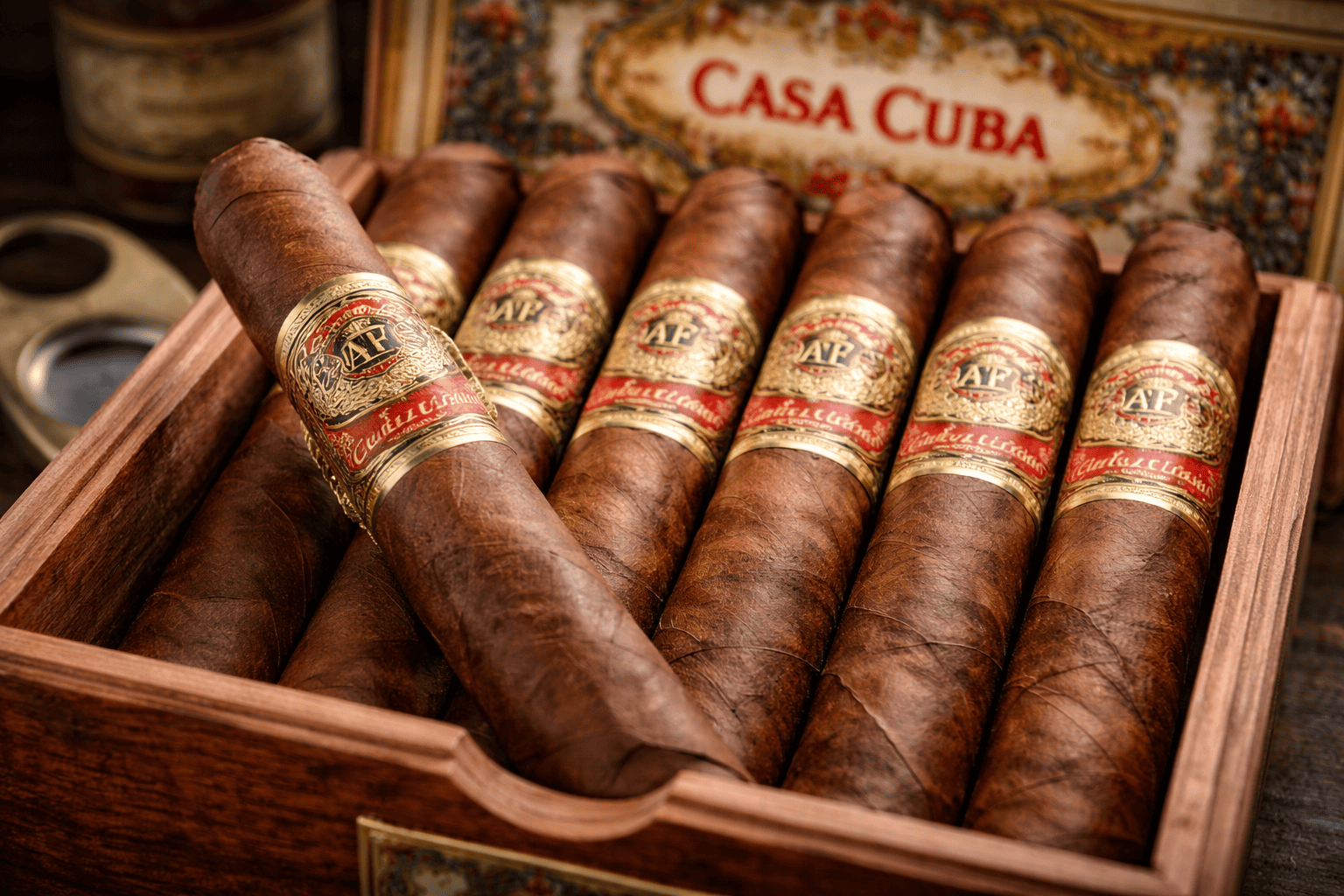
According to Arturo Fuente’s own description, “Casa Cuba is a tribute to the traditional Cuban cigar blends from the golden age of Cuban cigars.”
Source: https://www.fuente.com/casa-cuba/
That statement frames the project accurately. Casa Cuba cigars aim to reproduce balance, nuance, and textural evolution associated with mid-20th-century Cuban production, using exclusively Dominican-grown tobacco cultivated under controlled conditions. This article examines Casa Cuba cigars as agricultural artifacts, sensory instruments, and practical companions for contemporary enthusiasts, including those engaging with traveling with cigars airline rules, customs rules for cigars, and global cigar etiquette.
Historical Context And Intent
Casa Cuba did not emerge from market demand. It began as a personal blend developed by Carlos Fuente Jr. for private enjoyment. The goal centered on revisiting a flavor structure defined by moderate strength, layered aroma, and tactile elegance rather than density or intensity.
Pre-embargo Cuban cigars from the 1940s and 1950s often emphasized:
- Aromatic cedar and toasted grain
- Natural sweetness derived from long fermentation
- Subtle pepper integrated through retrohale
- Gradual progression without abrupt shifts
Casa Cuba was conceived to echo that framework using Dominican seed varietals cultivated on Fuente-controlled farms, primarily Chateau de la Fuente. This approach contrasts with many non-Cuban cigars that rely on strength or dark wrappers to assert identity.
Tobacco Selection And Agronomy
Casa Cuba cigars are Dominican puros. Wrapper, binder, and filler originate entirely from the Dominican Republic. This choice carries technical implications.
Dominican tobacco tends to produce:
- Lower nicotine concentration than Nicaraguan leaf
- Higher aromatic volatility
- Softer combustion temperature
- Greater elasticity in wrapper leaf
These traits support long smoking sessions with minimal palate fatigue. The wrapper used on Casa Cuba presents a medium rosado hue with fine veins and low surface oil. Its tactile dryness indicates extended fermentation rather than accelerated processing.
Fermentation cycles reportedly exceed three years before rolling. Extended fermentation reduces ammonia presence and stabilizes sugar compounds, contributing to clarity at ignition.
Construction And Physical Characteristics
Casa Cuba cigars are rolled at Tabacalera A. Fuente y Cia using traditional bunching methods. Construction emphasizes draw symmetry and burn predictability rather than visual flourish.
Observed construction attributes include:
- Slight box press softness without formal press
- Firm yet pliable body
- Consistent resistance across samples
- Ash formation that holds for several centimeters
These features support reliability during packing cigars for travel, particularly when cigars are exposed to moderate humidity fluctuation during transit.
Sensory Profile And Tasting Evolution
Casa Cuba cigars reward slow pacing. Their flavor profile unfolds gradually, reflecting a philosophy of progression rather than immediacy.
Opening Phase
Initial ignition produces:
- Dry cedar plank
- Toasted wheat
- Sweet hay
- Light white pepper through retrohale
Combustion temperature remains cool, and smoke texture appears silky rather than dense. The absence of sharp spice at this stage reflects extended fermentation.
Middle Phase
The core of the cigar introduces:
- Almond skin
- Baked apple
- Soft leather
- Subtle floral undertones
Sweetness becomes more pronounced, balanced by mineral dryness. Pepper remains present yet restrained, acting as structural support rather than dominant force.
Final Phase
The final third tightens in focus:
- Darker cedar
- Espresso crema
- Cocoa nib
- Dry earth
Strength increases modestly without harshness. Combustion remains stable, and bitterness does not emerge when smoked slowly.
This evolution aligns with the pre-embargo Cuban style referenced by the Fuente family: layered, aromatic, and measured.
Vitola Selection And Smoking Behavior
Casa Cuba is offered in classic vitolas such as Doble Cuatro, Doble Seis, and Magnum. Ring gauges remain moderate, supporting wrapper influence and burn control.
Smaller ring gauges accentuate aromatic nuance, making them suitable for morning or early afternoon sessions. Larger formats extend the middle phase, enhancing sweetness and mouthfeel.
For travelers navigating TSA cigar restrictions, these vitolas fit easily within compact travel humidors, reducing crush risk.
Aging Performance
Casa Cuba cigars display favorable aging characteristics. After 12 to 24 months at 65–67 percent relative humidity:
- Pepper softens further
- Sweetness integrates more deeply
- Cedar becomes creamier
- Smoke texture gains density
Extended aging beyond five years shows diminishing returns, as aromatic compounds begin to fade. These cigars benefit from moderation rather than indefinite storage.
Understanding customs rules for cigars becomes relevant when transporting aged Casa Cuba stock across borders, as declaration thresholds vary by jurisdiction.
Travel Considerations And Regulatory Awareness
Casa Cuba cigars often accompany enthusiasts during travel. Their resilience and balanced profile make them suitable companions across climates.
Air Travel
Most airlines permit cigars in carry-on and checked luggage. Cabin transport is preferred to avoid temperature fluctuation in cargo holds. Knowledge of how to carry humidor on plane includes selecting rigid cases and humidity packs calibrated below 70 percent.
Customs And Import Limits
Cigar laws by country differ significantly. Many nations impose quantity caps or require declaration beyond specific limits. Failure to comply can result in seizure or duty assessment.
Casa Cuba cigars, being Dominican, avoid embargo complications associated with Cuban origin in certain jurisdictions.
International Shipping
Shipping cigars internationally introduces risk related to temperature control and customs clearance. Casa Cuba cigars tolerate brief transit stress better than high-oil wrappers, though extended shipping without climate regulation remains discouraged.
Duty-Free Acquisition
Casa Cuba cigars occasionally appear in duty-free environments. Duty-free cigar buying tips include retaining receipts, verifying import allowances, and keeping cigars sealed until customs clearance.
Cultural Context And Smoking Etiquette
Casa Cuba cigars reflect a contemplative smoking culture. They align with environments that value conversation, pacing, and sensory awareness rather than spectacle.
Cigar-friendly travel destinations often provide private lounges or hotel cigar rooms where such cigars can be appreciated without conflict. Local smoking regulations abroad vary widely, and many urban centers restrict public smoking regardless of tobacco type.
Respect for local norms remains integral to the Casa Cuba philosophy, which emphasizes ritual over assertion.
Comparison Within The Fuente Portfolio
Casa Cuba occupies a distinct space relative to other Fuente offerings.
- Compared to OpusX: lower strength, greater aromatic subtlety
- Compared to Hemingway: less sweetness, more mineral structure
- Compared to Don Carlos: drier profile, longer finish
This differentiation reinforces Casa Cuba’s role as a stylistic homage rather than a flagship powerhouse.
Who Casa Cuba Is For
Casa Cuba cigars suit smokers who value:
- Flavor clarity over intensity
- Textural progression
- Balanced nicotine delivery
- Consistent construction
They appeal to those interested in historical continuity translated through modern agronomy.
Final Considerations
Casa Cuba cigars represent an intentional exercise in restraint, memory, and craft. They do not chase trends or numerical strength metrics. Their identity rests on balance, fermentation discipline, and Dominican terroir interpreted through Cuban tradition.
For enthusiasts navigating global travel, regulatory frameworks, and evolving smoking environments, Casa Cuba offers reliability and elegance without excess. Whether enjoyed at home, stored thoughtfully, or carried across borders in compliance with airline and customs protocols, these cigars reward patience and attention.
Their value lies not in rarity alone, but in how consistently they translate philosophy into sensory experience, one measured draw at a time.