
The search for the best box of cigars under $50 occupies a practical yet revealing corner of cigar culture. This price ceiling sits below the territory of prestige packaging and extended aging programs, yet above disposable novelty. Within it, the cigar becomes an object of repetition and familiarity rather than spectacle. A full box at this level signals intention: the buyer expects consistency across multiple sticks, not a singular moment of indulgence. Evaluating this category brings into focus how cigars are priced, how cigar price vs quality behaves at scale, and how value emerges when commitment shifts from one cigar to twenty or more.
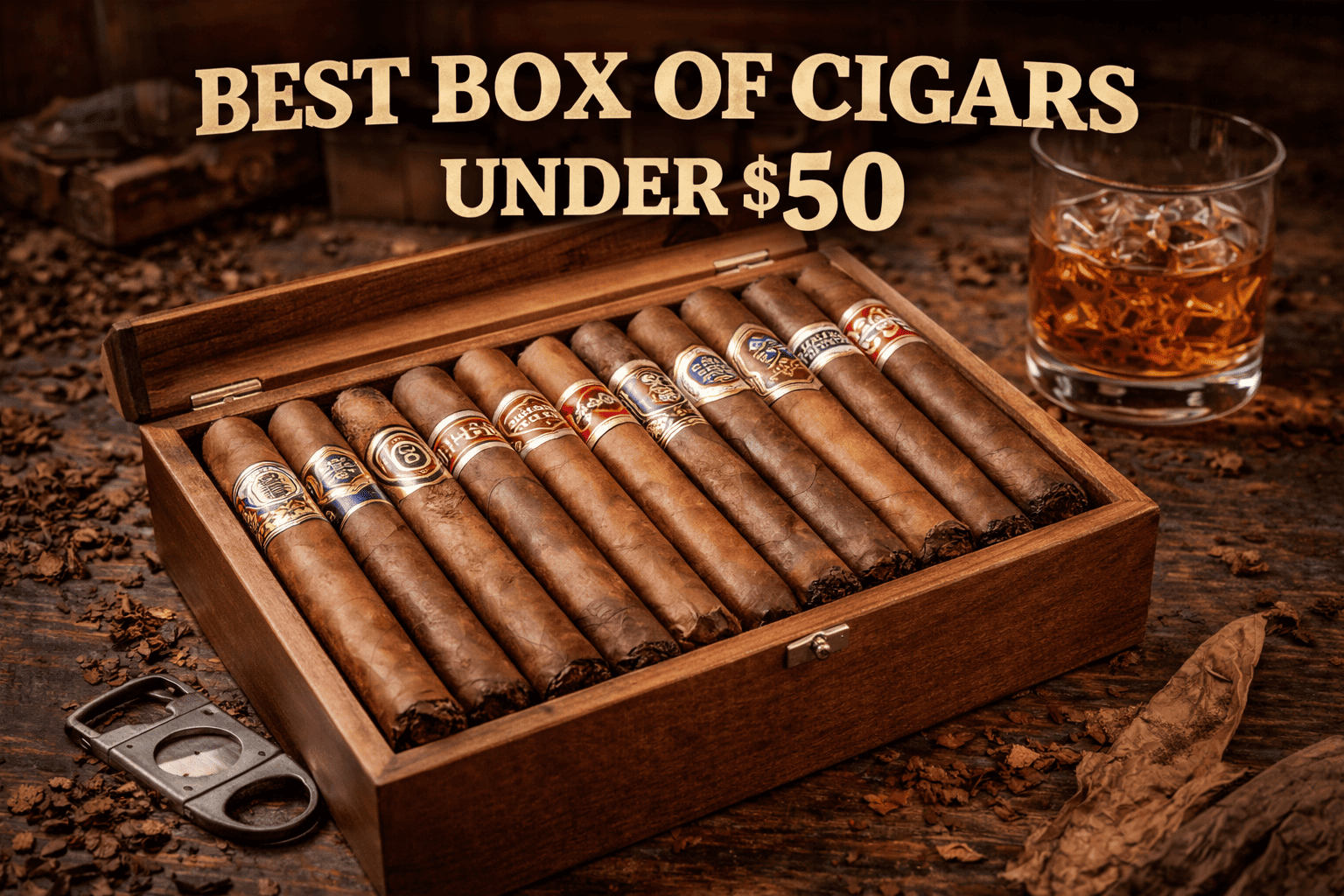
For many smokers, a box purchase under $50 functions as a working humidor staple. It supports daily or near-daily smoking without financial friction and offers enough volume to observe blend behavior across time, storage conditions, and personal palate changes. The exercise is less about finding cigars worth splurging on and more about identifying dependable performers that reward repetition.
Understanding Box Pricing At The Entry Level
Box pricing below $50 reflects a convergence of production efficiency and consumer expectation. Unlike premium boxes that emphasize presentation and scarcity, value-oriented boxes prioritize cost containment across several dimensions:
- Manufacturing scale: High-volume rolling or machine-assisted production reduces per-unit labor cost.
- Tobacco selection: Short-filler or mixed-filler blends lower raw material expense.
- Aging duration: Limited post-roll aging reduces inventory holding costs.
- Packaging: Plain cardboard or lightweight wooden boxes replace ornate cabinetry.
These factors illustrate what affects cigar price when the goal shifts from luxury signaling to sustained availability. In many cases, cigars sold individually for $2–3 are bundled into boxes of 20–25 to meet the sub-$50 threshold.
Comparing cigar price tiers shows that boxes under $50 typically contain cigars retailing individually below the U.S. premium average price of $10.80 reported by the National Cigar Association in 2022.
https://cigarassociation.org/resources/facts-figures/
Why Buy A Box Instead Of Singles
A box purchase introduces variables absent from single-cigar buying:
- Blend consistency across production runs
- Construction reliability over repeated samples
- Storage response over weeks or months
How to evaluate cigar value becomes clearer through repetition. A cigar that performs well once may reveal flaws over time; a cigar that performs acceptably twenty times establishes credibility.
From a cost perspective, boxes often reduce per-cigar pricing by 15–30% compared to singles, reinforcing their appeal within budget cigar recommendations.
Typical Box Formats Under $50
Boxes in this category tend to fall into predictable configurations:
- 20 cigars at $2.00–2.50 each
- 25 cigars at $1.75–2.00 each
- 40–50 cigars at $1.00–1.25 each
Ring gauges usually range from 38 to 50, with lengths between 4 and 6 inches. These dimensions favor efficient tobacco usage and faster smoking times, aligning with everyday consumption patterns.
Flavor Architecture In Budget Boxes
Flavor in this segment emphasizes stability rather than progression. Blends are designed to avoid sharp transitions or excessive nicotine spikes. A typical smoking arc includes:
- Opening phase: Dry cedar, paper, light toast
- Middle phase: Neutral wood, mild earth, faint sweetness
- Closing phase: Mineral ash, restrained bitterness
Texture remains thin to medium, with limited oil development. This profile reduces palate fatigue across multiple cigars and supports repeat use.
From the perspective of best cigars for the money, restraint becomes a feature rather than a limitation.
Notable Boxes Commonly Available Under $50
Availability fluctuates by retailer and tax jurisdiction, yet several boxes consistently appear within this price range.
J.C. Newman Factory Rejects
Often sold in plain bundles or boxes of 20–25, these cigars originate from established blends rejected for cosmetic reasons. Flavor remains intact, construction varies slightly. Pricing frequently falls between $35–45 per box.
Phillies Blunt Natural (Non-Flavored)
Boxes of 50 machine-made cigars regularly retail below $45. The blend offers dry grain, light earth, and consistent burn. These cigars occupy a similar functional niche to Cuban Rounds, emphasizing repetition.
Don Tomás Clasico Bundles
Produced in Honduras, these mixed-filler cigars appear in boxes or bundles of 25 under $50. The flavor profile includes mild spice, toasted wood, and low sweetness. Construction consistency exceeds many domestic machine-made options.
Flor De Oliva Original Bundles
Often available in boxes or bundles of 20–25 near the $45–50 mark. Nicaraguan filler and binder produce earth-forward profiles with moderate strength. These cigars frequently appear on value cigar brands list compilations.
Construction Considerations At Scale
When assessing a full box, construction matters more than isolated flavor moments. Key indicators include:
- Draw uniformity across the box
- Burn line consistency without frequent touch-ups
- Wrapper adhesion resisting unraveling
Machine-made cigars often outperform handmade counterparts in draw consistency, though they may sacrifice tactile complexity. Handmade bundles under $50 show wider variance, rewarding careful inspection.
Understanding cigar price vs quality in box form requires accepting trade-offs between mechanical reliability and sensory nuance.
Storage Behavior And Aging Potential
Most cigars in boxes under $50 are intended for immediate consumption. Aging potential remains limited, yet short-term humidor rest often improves combustion and rounds harsh edges.
Studies referenced by Cigar Journal note that lower-priming tobaccos show diminishing returns after 6–12 months of aging.
https://www.cigarjournal.com
This reinforces the practical approach: buy boxes for use, not speculation.
Box Purchases And Investing In Rare Cigars
Boxes under $50 hold no relevance for investing in rare cigars. Their production scale, blend simplicity, and market availability exclude them from appreciation scenarios. Auction data from Bonhams shows no secondary market activity for budget bundles.
https://www.bonhams.com
Their value lies in consumption, not accumulation.
Social And Cultural Context
Historically, box purchases at modest prices aligned with working-class cigar culture. Cigars were household goods, not display items. Mid-20th-century sales data referenced in Gary Cross’s An All-Consuming Century describe tobacco as a repeat-purchase commodity rather than a luxury artifact.
This context frames why boxes under $50 persist. They support shared smoking, routine use, and low-stakes enjoyment.
Comparing Cigar Price Tiers Through Box Economics
When comparing cigar price tiers through box purchases:
- Under $50 boxes: Utility, repetition, low commitment
- $80–120 boxes: Entry premium, moderate aging
- $200+ boxes: Presentation, scarcity, long-term storage
The lowest tier prioritizes availability and predictability over narrative.
Common Pitfalls When Buying Budget Boxes
- Expecting premium complexity from utility blends
- Ignoring construction variance within handmade bundles
- Overbuying without storage capacity
How to evaluate cigar value at the box level requires aligning expectations with intended use.
Best Practices For Selecting A Box Under $50
- Buy from retailers with clear turnover to avoid stale inventory
- Favor boxes with cellophane to reduce handling damage
- Sample singles from the same line when possible
- Match strength level to intended frequency of smoking
Cigars Worth Splurging On Versus Everyday Boxes
Cigars worth splurging on often reward attention, ceremony, and time. Boxes under $50 reward habit and familiarity. Each serves a role. Confusing them leads to misaligned expectations.
The everyday box functions as a baseline, not a substitute for premium experiences.
Final Considerations
The best box of cigars under $50 is defined less by individual brilliance than by collective reliability. These boxes demonstrate how cigars are priced when efficiency, scale, and routine guide production. They clarify what affects cigar price at the lowest tiers and show how cigar price vs quality shifts when repetition replaces rarity.
For smokers seeking the best cigars for the money in volume, this category offers functional satisfaction. It supports daily use, shared contexts, and practical enjoyment without pretense. Within budget cigar recommendations, a well-chosen box under $50 remains one of the most honest expressions of cigar value.