
Within the contemporary premium cigar category, Cao Italia stands apart through material choice rather than strength escalation or novelty-driven branding. Its identity rests on agricultural divergence, centered on Italian-grown tobacco rarely seen in large-scale premium production. This choice establishes a cigar that invites measured attention, one shaped by fermentation discipline, combustion behavior, and a flavor profile structured around smoke texture and aromatic density rather than sheer power.
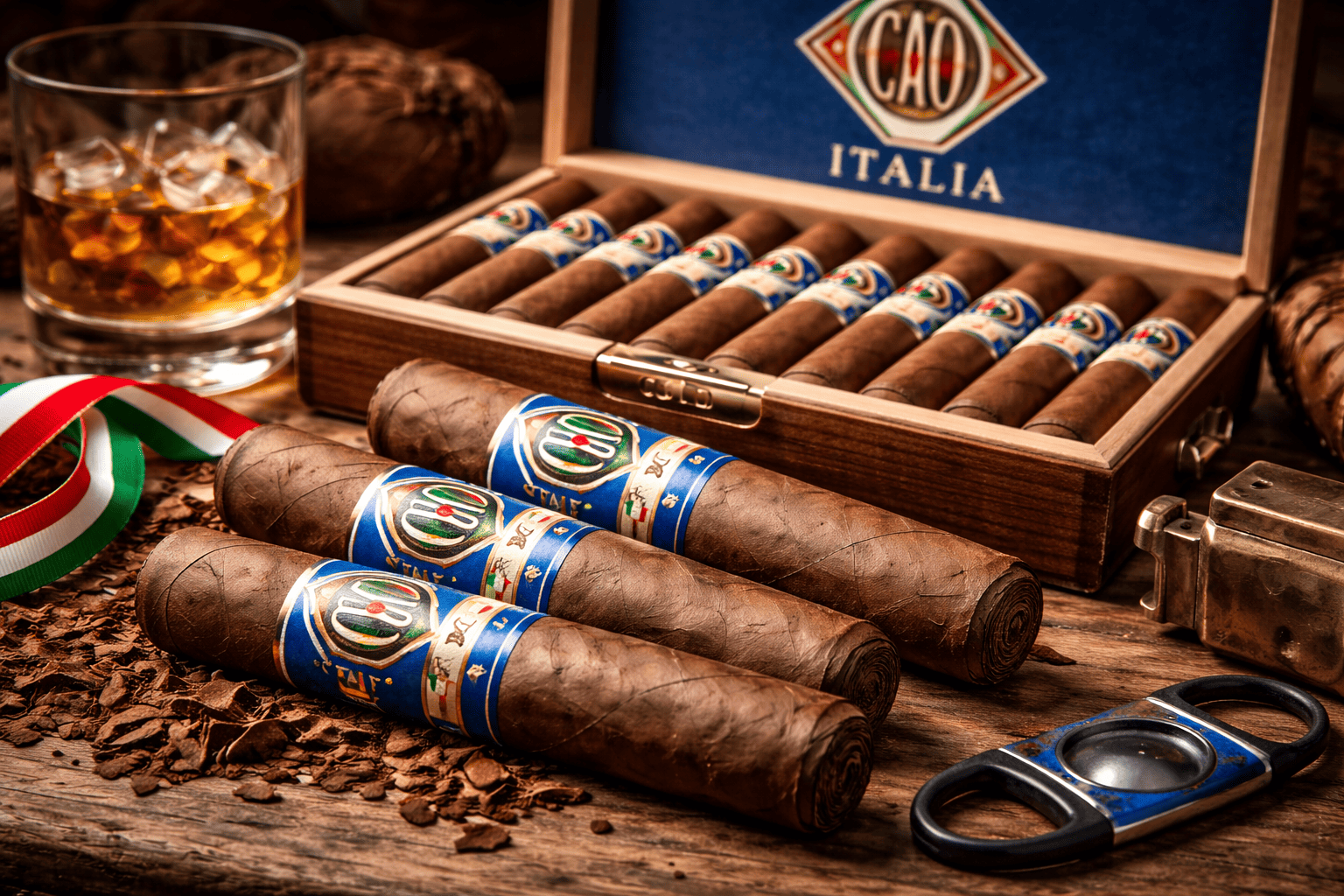
Cao Italia occupies a distinct position inside the CAO portfolio, complementing lines such as Cao Gold and Cao Brazil while reinforcing the brand’s long-standing inclination toward leaf-driven storytelling. Its presence remains relevant in discussions surrounding best premium cigar brands 2025, not through market dominance, though through technical distinctiveness sustained across multiple production cycles.
Brand Lineage and Strategic Intent
CAO emerged during the 1990s cigar renaissance, initially recognized for classical blending before expanding into regionally expressive releases. Cao Italia arrived as a deliberate counterpoint to Connecticut and Corojo-dominated offerings, relying on European tobacco agriculture rather than Caribbean or Central American norms.
The decision to utilize Italian-grown wrapper tobacco placed Cao Italia in a narrow category that intersects with long-established cigar manufacturers and experimental projects more often associated with boutique cigar makers to know. Italy maintains a regulated tobacco cultivation infrastructure, primarily supporting dark-fired and air-cured leaf for pipe and cigarette production. Translating this agricultural tradition into premium cigar wrappers required adaptation rather than imitation.
This approach reflects a strategic position grounded in differentiation rather than trend participation. Cao Italia does not attempt to replicate Cuban cigar brand history profiles, nor does it emulate the high-priming intensity typical of top Nicaraguan cigar brands.
Tobacco Composition and Agricultural Foundations
Cao Italia is constructed with a blend that prioritizes combustion stability and aromatic density:
- Wrapper: Italian-grown Habano-seed
- Binder: Honduras
- Filler: Nicaragua and Peru
The Italian wrapper is cultivated primarily in the Benevento region, an area historically associated with dark tobaccos used in Toscano-style cigars. Soil composition features high mineral content and moderate alkalinity, conditions that favor thick leaf structure and pronounced combustion oils.
Unlike Ecuador-grown wrappers, Italian leaf experiences direct sun exposure. This results in increased nicotine retention and elevated lignin levels, contributing to slower combustion and darker smoke output. Fermentation cycles for this wrapper extend beyond those used for Connecticut or Shade-grown leaves, reducing vegetal sharpness while preserving smoky undertones.
The Honduran binder introduces tensile strength and burn regulation, while Nicaraguan and Peruvian fillers supply body variation and aromatic layering. Peruvian tobacco, frequently overlooked in mainstream blending, contributes dry herbal tones and combustion elasticity, reinforcing balance without increasing nicotine delivery.
Visual Presentation and Pre-Light Assessment
Cao Italia presents a visually assertive profile. The wrapper exhibits deep espresso coloration with coarse vein structure and visible oil migration. Surface texture remains rustic rather than polished, reinforcing its agricultural origin rather than cosmetic refinement.
Cap construction shows consistent triple-seam application, indicating mechanical precision rather than artisanal variance. Firmness across the barrel remains uniform, with minimal compression variance near the foot.
Cold draw assessment often yields notes of smoked cedar, leather, dried fig, and charred grain. Airflow remains slightly resistant, consistent with thicker wrapper leaf and higher filler density. This resistance supports controlled combustion rather than rapid smoke output.
First Third: Ignition and Orientation
Upon ignition, Cao Italia establishes its identity immediately. Smoke output appears dense yet cool, with combustion settling gradually across the foot. Early flavor impressions emphasize campfire wood, toasted rye, and black tea.
Nicotine delivery registers at a moderate level, presenting structure rather than force. Retrohale introduces a restrained pepper note, closer to toasted spice than sharp pungency.
This opening segment demonstrates how fire-adjacent aromatics can exist without reliance on fire-cured tobacco. Instead, fermentation depth and wrapper density shape the profile. This distinction often situates Cao Italia within discussions featured in Dominican cigar houses guide resources, as an example of non-Dominican restraint achieved through process rather than terroir replication.
Second Third: Expansion and Texture Integration
Progression into the middle third brings incremental development rather than contrast. Smoke texture thickens, coating the palate with sustained aromatic presence. Flavor components evolve toward roasted walnut, cocoa husk, and dry earth.
Combustion behavior remains steady, with ash formation showing compact structure and darker gray coloration. Burn lines maintain evenness, supported by binder tensile integrity and filler elasticity.
The Peruvian filler becomes more apparent during this phase, introducing faint eucalyptus and dried herb nuances. These elements prevent monotony without altering the cigar’s structural direction.
This phase illustrates why Cao Italia often appears alongside best value cigar brands discussions. Its complexity derives from material synergy rather than blending aggression, supporting repeatability across extended sessions.
Final Third: Concentration Without Escalation
The final portion retains composure, resisting the bitterness commonly associated with thick-wrapper cigars nearing completion. Flavors consolidate around charred oak, unsweetened cocoa, and residual leather.
Nicotine presence increases marginally, though remains within controlled bounds. Combustion temperature stays moderate until the final inch, reducing acrid development.
This stability reflects disciplined fermentation schedules rather than extended aging alone. Cao Italia avoids sudden strength surges, a quality valued among smokers seeking structured experiences rather than escalating intensity.
Construction Performance and Manufacturing Discipline
Across multiple vitolas, Cao Italia demonstrates consistent mechanical performance. Burn deviation averages under six degrees, draw resistance remains within optimal parejo parameters, and wrapper integrity shows minimal cracking under stable humidity.
These characteristics align Cao Italia with expectations typically associated with long-established cigar manufacturers rather than experimental releases or new cigar brands to try.
Production protocols emphasize repeatability, with rolling teams trained to accommodate thicker wrapper elasticity without compromising airflow. This operational discipline allows Cao Italia to maintain identity across production years.
Cultural Role and Social Context
Cao Italia functions effectively in contemplative settings. Its smoke density supports slower pacing, encouraging measured draws rather than continuous consumption. Pairings often favor beverages that reinforce dryness and structure, including espresso or moka-style coffee, mineral-forward red wine, and amaro-based aperitifs.
In communal contexts, Cao Italia sustains presence without dominating conversation. This balance aligns with traditions upheld by family-run cigar companies, where cigars serve as anchors for dialogue rather than focal distractions.
Position in the Contemporary Premium Landscape
Within current premium discourse, Cao Italia occupies a niche defined by agricultural divergence rather than trend alignment. Its Italian wrapper positions it outside dominant narratives shaped by Nicaragua and the Dominican Republic.
It remains relevant within curated luxury cigar makers list discussions, serving as an example of how non-traditional leaf sourcing can succeed at scale. Its continued production suggests sustained demand rooted in differentiation rather than novelty cycles.
For consumers tracking best premium cigar brands 2025 through a lens of material integrity, Cao Italia offers a study in how fermentation discipline and wrapper selection shape experience more reliably than strength escalation.
Educational Value for Developing Palates
Cao Italia serves as a practical reference for understanding how wrapper origin influences combustion behavior, smoke density, and aromatic persistence. It offers contrast against milder Connecticut styles and sharper sun-grown profiles without requiring acclimation to high nicotine levels.
This educational function supports its inclusion in samplers designed to contextualize Cuban cigar brand history influences and non-Cuban evolution, providing tangible examples of how geography intersects with process.
Final Considerations
Cao Italia represents a controlled departure from convention, defined by agricultural choice and fermentation discipline rather than stylistic excess. Its Italian wrapper introduces texture, smoke density, and aromatic gravity rarely encountered in regular production cigars. Construction reliability and measured flavor progression reinforce its standing among best value cigar brands and within broader evaluations that include top Nicaraguan cigar brands and established Dominican frameworks.
For smokers seeking structure, material clarity, and a composed sensory arc, Cao Italia remains a relevant and instructive presence within the modern premium cigar landscape.