
Within the broad catalog of modern premium cigars, Cao Gold occupies a defined and deliberate position. It does not chase intensity, nor does it rely on novelty. Its purpose rests in control, accessibility, and a restrained expression of materials that have long been central to handmade cigar production. Examined closely, Cao Gold reveals how careful agricultural selection, conservative blending philosophy, and consistent manufacturing practices can yield a cigar that remains relevant across shifting consumer preferences.
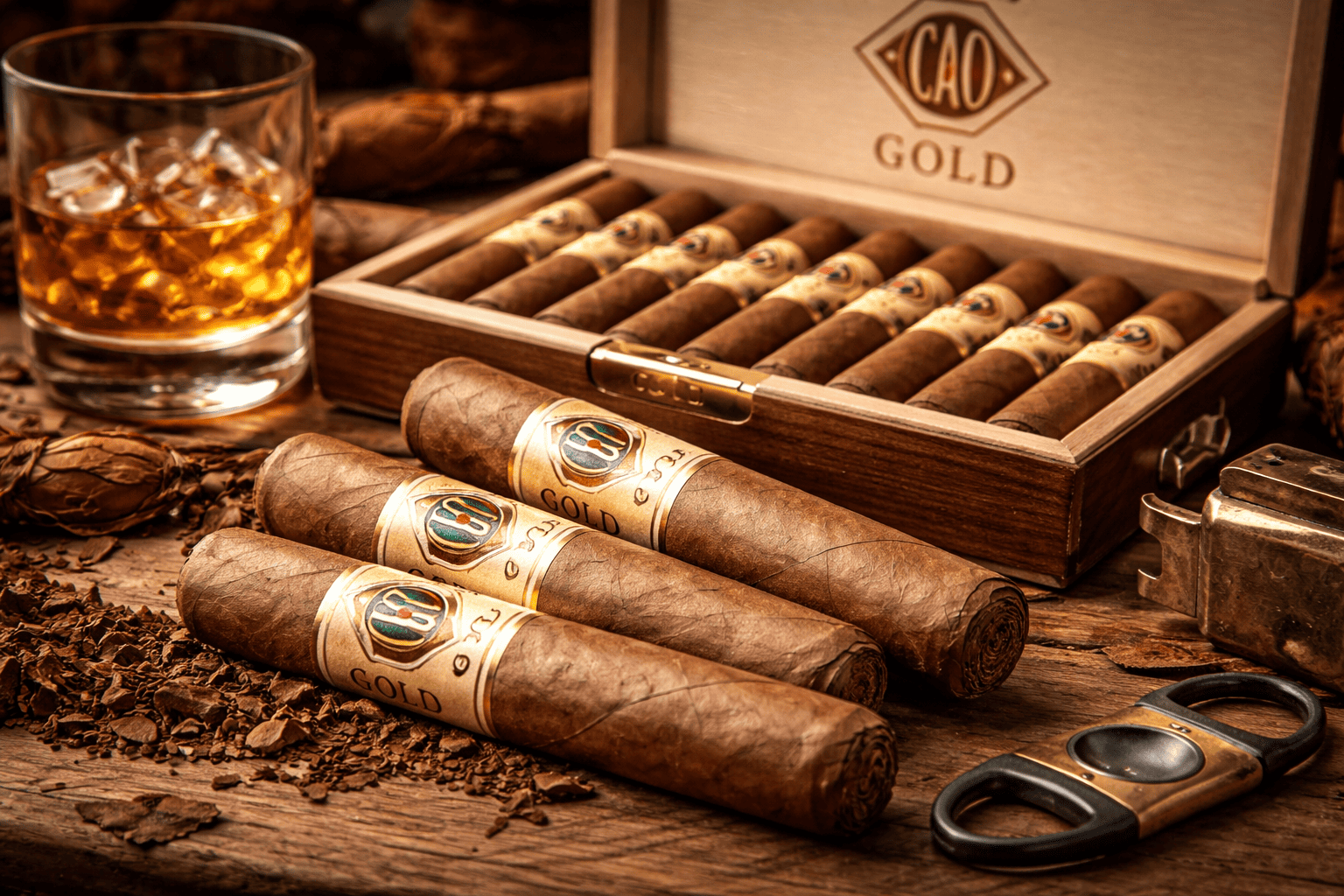
Produced under the portfolio of CAO Cigars, Cao Gold reflects a period in the brand’s history when balance and approachability guided product development. This line continues to serve as a reference point when discussing best value cigar brands and the role of established blends within the wider ecosystem that includes boutique cigar makers to know and long-established cigar manufacturers alike.
Brand Context and Market Placement
CAO emerged in the 1990s during a phase of renewed global interest in premium cigars. The company developed a reputation for experimentation in later years, yet its earlier releases focused on classical profiles. Cao Gold belongs firmly to that earlier design language. It remains part of the regular production catalog rather than a limited or commemorative release, which places it in direct conversation with family-run cigar companies that prioritize continuity over novelty.
From a market standpoint, Cao Gold frequently appears in discussions related to:
- Best premium cigar brands 2025 lists emphasizing consistency
- Best value cigar brands aimed at repeat purchasing
- Entry points for smokers transitioning from mild machine-made cigars to handmade formats
Its pricing typically sits below many offerings included in a luxury cigar makers list, though its construction standards remain aligned with premium handmade expectations.
Blend Composition and Tobacco Selection
Cao Gold is built around a traditional Connecticut-style concept, interpreted through non-Cuban sourcing. The blend consists of:
- Wrapper: Ecuador-grown Connecticut-seed
- Binder: Nicaragua
- Filler: Nicaragua
The Ecuadorian Connecticut wrapper benefits from the country’s natural cloud cover, which reduces direct sunlight and promotes thinner leaf structure with lower chlorophyll concentration. This environment produces wrappers with lighter coloration and subdued surface oils, characteristics associated with restrained combustion behavior and softer aromatic output.
Nicaraguan binder and filler tobaccos introduce a structural counterbalance. Nicaragua’s volcanic soils contribute mineral density and combustion stability, allowing the cigar to maintain even burn lines without aggressive fermentation signatures. This combination positions Cao Gold apart from profiles commonly associated with top Nicaraguan cigar brands that emphasize strength.
Pre-Light Evaluation and Construction Analysis
Visual inspection reveals consistent wrapper coloration ranging from pale gold to light straw, with minimal veining and a matte finish. The cap application typically displays clean symmetry, suggesting standardized rolling protocols rather than artisanal variance.
Tactile examination shows uniform firmness across the barrel, slight elasticity near the foot, and no detectable soft spots or voids.
Cold draw testing often yields mild resistance, indicating intentional bunch compression. Aromas detected prior to ignition include dried hay, unsalted almond, and faint paper sweetness. These notes align with expectations for Connecticut-seed wrappers and signal controlled fermentation rather than extended aging.
First Third: Establishing the Framework
Upon ignition, Cao Gold introduces its profile gradually. Initial smoke output remains moderate, with combustion stabilizing within the first centimeter. The opening flavor register centers on light cream, toasted grain, and soft cedar.
Nicotine presence remains low, positioning the cigar well for daytime consumption or extended sessions. The retrohale introduces a mild white pepper sensation, more textural than pungent, reinforcing balance rather than contrast.
During this phase, Cao Gold demonstrates why it is frequently referenced in Dominican cigar houses guide discussions, despite its Nicaraguan core. The flavor structure mirrors the linear progression often associated with Dominican blending philosophy, where transitions occur subtly rather than through sharp inflection points.
Second Third: Texture and Development
As combustion progresses, the cigar exhibits modest evolution rather than transformation. Body increases slightly, accompanied by roasted cashew, warm bread crust, and light caramelized sugar.
Ash structure remains compact, with pale gray coloration indicating efficient mineral burn. Smoke texture thickens marginally, enhancing mouthfeel without increasing strength. Draw resistance remains consistent, reflecting effective moisture management during production and storage.
This middle segment highlights Cao Gold’s role within a broader educational context. For smokers studying Cuban cigar brand history, this phase demonstrates how non-Cuban producers replicate restraint through agricultural and fermentation control rather than terroir imitation.
Final Third: Resolution Without Escalation
The closing portion maintains composure. No surge in pepper or bitterness emerges, a trait that reinforces Cao Gold’s reliability. Flavors gravitate toward dry oak, light cocoa powder, and residual cream.
Combustion temperature remains stable until the final inch, reducing the need for frequent relights. The absence of sharp tannins or ammonia notes suggests adequate aging prior to release, though not extended beyond commercial efficiency thresholds.
This measured resolution supports Cao Gold’s standing among best value cigar brands, particularly for smokers prioritizing predictability over dramatic flavor arcs.
Manufacturing Consistency and Quality Control
Cao Gold is produced in facilities that emphasize repeatability. Rolling teams follow standardized bunching techniques, limiting variance between samples. This approach contrasts with new cigar brands to try that may prioritize experimental blending at the expense of consistency.
Observed quality metrics across multiple samples include burn deviation under five degrees on average, draw resistance within optimal range for parejo formats, and minimal wrapper cracking under stable humidity conditions.
Such performance metrics explain why Cao Gold often appears in curated samplers alongside offerings from long-established cigar manufacturers.
Cultural Function and Ritual Use
Beyond sensory evaluation, Cao Gold serves a social function. Its mild profile allows for extended conversation without palate fatigue. It pairs effectively with light-roast coffee, sparkling mineral water, and non-peated single malt whisky.
In communal settings, Cao Gold reduces sensory dominance, allowing shared environments rather than solitary focus. This characteristic aligns it with the values historically upheld by family-run cigar companies, where cigars functioned as accompaniment rather than centerpiece.
Position Within Contemporary Cigar Discourse
In a market increasingly shaped by boutique cigar makers to know and high-strength limited releases, Cao Gold operates quietly. Its relevance lies not in trend leadership but in structural reliability. It provides a reference standard against which more aggressive blends can be measured.
Its continued production suggests sustained demand, particularly among smokers seeking an alternative to escalating nicotine levels without abandoning handmade quality. This quiet endurance secures its place alongside other enduring blends that form the backbone of many luxury cigar makers list discussions.
Final Considerations
Cao Gold represents a disciplined expression of classic cigar-making principles. It avoids theatrical shifts, favors balance over intensity, and relies on proven agricultural inputs rather than experimental leaf sourcing. Its construction reliability and restrained flavor profile sustain its reputation within discussions spanning Dominican cigar houses guide resources, Cuban cigar brand history comparisons, and evaluations of top Nicaraguan cigar brands from a structural perspective.
For those assessing best premium cigar brands 2025 with an emphasis on usability rather than spectacle, Cao Gold remains a relevant and instructive option. Its value resides not in surprise, but in execution—steady, deliberate, and respectful of the traditions it quietly upholds.