
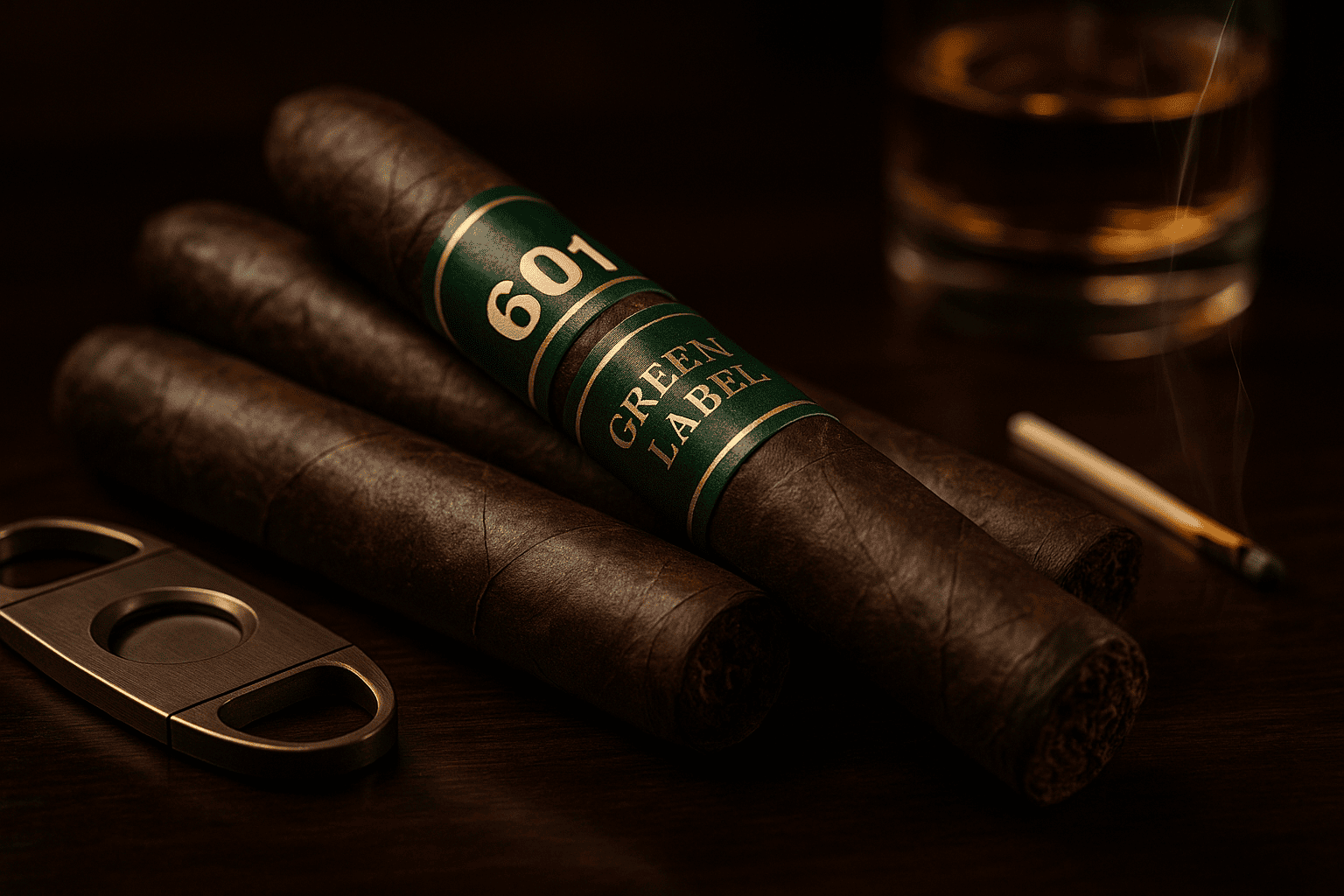
A focused study of the 601 Green Label Oscuro yields a clear lesson in contemporary Nicaraguan craftsmanship. The line is associated with Erik Espinosa’s 601 family of blends and produced at AJ Fernandez’s San Lotano facilities. The Oscuro variant is notable for a dark Habano Oscuro wrapper, a Nicaraguan binder and filler package, and a flavor profile that places power and sweetness in close conversation. These basic facts anchor a technical tasting and practical guidance for the experienced smoker who wants to understand how blend, seed and terroir combine into a specific sensory statement. 601 Cigars, AJ Fernandez, HalfWheel
Origins and manufacture
The 601 brand predates its current production arrangement, but the move of significant 601 manufacturing to AJ Fernandez’s San Lotano factory is a documented decision that changed scale and availability. Espinosa transferred most of the 601 output to San Lotano because demand outgrew his own La Zona capacity; in his words, “My La Zona factory in Estelí has been producing quality cigars for close to five years now,” which was part of the public conversation about capacity and quality control. Production at San Lotano allowed larger runs while keeping oversight of blend parameters. 601 Cigars, AJ Fernandez
Blend and construction: what the composition implies
Technical composition matters because wrapper leaf contributes immediate aromatics while binder and filler control structure, burn and nicotine delivery. The 601 Oscuro’s Nicaraguan Habano Oscuro wrapper supplies dark-sugar and roasted notes up front, while the internal long filler—drawn from Nicaraguan primings—provides sustained spice and density across the smoke. This is a practical demonstration of wrapper vs filler differences: the wrapper colors the first inhalations, the filler defines the kinetic energy of the middle and final thirds. 601 Cigars, AJ Fernandez
Observers report a generally sound build: consistent packing, steady draw and an even burn when the cigar is cut and lit properly. Publication reviews and retailer notes describe the ash and burn as predictable, which reflects factory attention to sorting and rolling. A stable construction allows the taster to focus on flavor evolution rather than compensate for mechanical faults. HalfWheel, Cigar Aficionado
Sensory profile and tasting narrative
The Oscuro’s appearance signals a certain tasting arc. The wrapper’s tone aligns with standard Maduro wrapper characteristics—dark sugar, cocoa and roasted coffee on first impression—yet the Oscuro’s Habano lineage injects pepper and savory lift that keep the palette engaged. In the first third the smoke commonly shows coffee, sweet spice and a touch of black pepper on the finish. Later thirds concentrate cocoa, leather and toasted wood, with a black-pepper retrolhale available for those who practice that technique. Cigar Aficionado, HalfWheel
Cigar Aficionado’s tasting note for the petit corona reads, verbatim: “Silky to the touch, the dark wrapper of this petit corona accentuates its well-formed head and shoulders. The smoke is sweet and woody with notes of coffee, cinnamon, and a black pepper finish.” That assessment is broadly consistent with multiple independent reviews that cite a balance of sweetness and spice. Cigar Aficionado
A careful approach to a smoke of this style rewards patient technique. Toast and light the foot, then maintain a measured cadence of draws. Each puff should be mouth-focused to capture aromatic detail without producing excess heat. Use the retrohale method sparingly to detect volatile top notes such as cinnamon or clove. These practical steps preserve nuance and reduce the risk of an overcooked final third. Cigar Aficionado — How to Light a Cigar, HalfWheel
Why terroir and seed choice matter here
The Oscuro demonstrates how how terroir affects cigars in practice. Nicaraguan soils—often volcanic and mineral rich—tend to yield leaves with concentrated oils and a natural spicy backbone. When blended with Cuban-seed lineages grown outside Cuba, the result can be peppery structure plus local sweetness. The 601 Oscuro’s internal mix emphasizes Nicaraguan tobacco strengths that tend toward boldness, which is a predictable outcome for a Nicaraguan puro or Nicaraguan-dominant blend. That pattern helps explain why the line registers as full and assertive. 601 Cigars, AJ Fernandez
The technical contrast of Cuban seed vs Criollo is helpful in framing expectations. Cuban-seed or Habano-seed types often bring an inherent spicy or citrus-lemon note when adapted to Nicaraguan soils; Criollo lineage can manifest sweeter, earthier character. The Oscuro’s blend choices favor a Habano-derived intensity that complements the darkest wrapper fermentation. Use of seed and priming selection in the filler is central to how the cigar’s power and sweetness balance across the thirds. Cigar Aficionado, 601 Cigars
Practical tasting technique: maximizing fidelity to the blend
A disciplined method is essential with a full-bodied Oscuro. The following checklist helps the taster extract the maker’s intention without overcooking or under-revealing the tobacco’s subtleties:
- Use the best cigar cutting methods. A straight guillotine or a sharp V-cut prevents tearing and preserves the cap.
- Toast the foot first and then finish the light with rotation so that how to light a cigar evenly is practiced. This produces an even ember and reduces relights.
- Keep to proper cigar draw technique: short, intentional puffs that remain mouth-focused. This supports flavor extraction and avoids palate fatigue.
- Apply cigar puffing rhythm tips and slow smoking for flavor: a 30–60 second interval between puffs for larger ring gauges helps maintain temperature control.
- Use the retrohale method explained in moderation to verify spicy top notes. A careful retrohale reveals black pepper and baking-spice nuances without becoming abrasive.
- Let the ash grow to a modest length and use gentle cigar ash handling tips; avoid knocking aggressively, which disturbs combustion and can spoil balance.
These small practices preserve the cigar’s evolution and help maintain cigar burn line. Cigar Aficionado — How to Light a Cigar, HalfWheel
Comparative context: Dominican and Nicaraguan contrasts
Comparisons are useful for palate training. Dominican leaf is often praised for smooth, floral sugar and creamy mid-palate signatures—summarized under Dominican tobacco flavor notes—whereas Nicaraguan tobacco strengths typically emphasize pepper, earth and concentrated oils. The 601 Green Label Oscuro sits solidly in the Nicaraguan tradition and offers a direct way to contrast those national tendencies: its mid- and final thirds show the concentration and mineral note that define many Nicaraguan blends, which clarifies the practical differences between origin-driven profiles. Tasting a Dominican-wrapped cigar side-by-side will make those contrasts obvious. 601 Cigars, Cigar Aficionado
Reception, ratings and place in the market
The Oscuro has enjoyed positive critical attention. Cigar Aficionado scored one vitola in the series 90 points, describing the smoke with the tasting phrases quoted earlier. Retailers and review sites commonly give the line solid ratings and position it as full-bodied and value-oriented relative to other boutique releases. Those assessments reflect a consistent performance profile in blend, construction and accessible price point for experienced smokers. Cigar Aficionado, HalfWheel
Pairings and serving suggestions
The Oscuro’s sweet-roasted and spice-forward arc pairs well with dark-roast coffee and aged rums that echo molasses and caramel. For a contrast pairing, a drier single-malt whisky brings minerality that offsets the cigar’s sweetness. Temperature and humidity during service matter: keep the lounge space within standard humidity ranges so ash and combustion behave optimally. Serving a robust Oscuro in a smaller vitola makes a dense, focused session; a larger toro permits a more gradual unfolding of tertiary notes. Cigar Aficionado
The cigar in the maker’s portfolio and the business context
Erik Espinosa’s 601 umbrella includes multiple labels with differing wrapper philosophies. The Green Label Oscuro represents the lineup’s darkest and most power-forward expression, while other labels in the family trade on milder or alternate-wrapper approaches. Production migration of portions of the 601 range to AJ Fernandez’s San Lotano factory was a strategic response to demand and to the need for expanded controlled capacity, which made the Oscuro more widely available. Espinosa has discussed business realities of production and growth in interviews that emphasize quality control and scale management. 601 Cigars, AJ Fernandez
Final Considerations
The 601 Green Label Oscuro is a practical case study in modern Nicaraguan blending and manufacturing: its oily Habano Oscuro wrapper displays classic Maduro wrapper characteristics in appearance and initial taste while the Nicaraguan binder and filler demonstrate clear Nicaraguan tobacco strengths across the middle and final thirds. The cigar illustrates tobacco blending basics and offers a clear illustration of wrapper vs filler differences, which makes it useful for comparative tastings. Attention to method—using best cigar cutting methods, mastering how to toast a cigar and how to light a cigar evenly, applying proper cigar draw technique, following cigar puffing rhythm tips, testing the retrohale method explained in small doses, practicing smoking a cigar without inhaling, observing cigar ash handling tips and maintaining cigar burn line—lets the taster unlock the Oscuro’s layered profile and assess its aged tobacco flavor impact within the broader context of origin and seed decisions such as Cuban seed vs Criollo choices. Critical notes and the maker’s production history provide empirical anchors for judgement, and direct tasting remains the final arbiter of how the blend resolves on any palate. 601 Cigars, Cigar Aficionado, AJ Fernandez