
A supreme blend is a deliberate exercise in harmonization: leaf, seed, soil, and craftsmanship combined to produce a consistent sequence of sensations from first light to the final ember. The label “Supreme Blend” can denote a specific house expression or serve as shorthand for a maker’s flagship composition—one that showcases tobacco blending basics while privileging balance, structural integrity, and a clear aromatic signature. This article treats the subject as both technical dossier and tasting narrative: it outlines the agronomy behind the leaves, contrasts wrapper classes and filler strategies, and offers reproducible tasting methods that reveal what a well-executed supreme blend can express across its thirds.
What defines a “supreme” blend
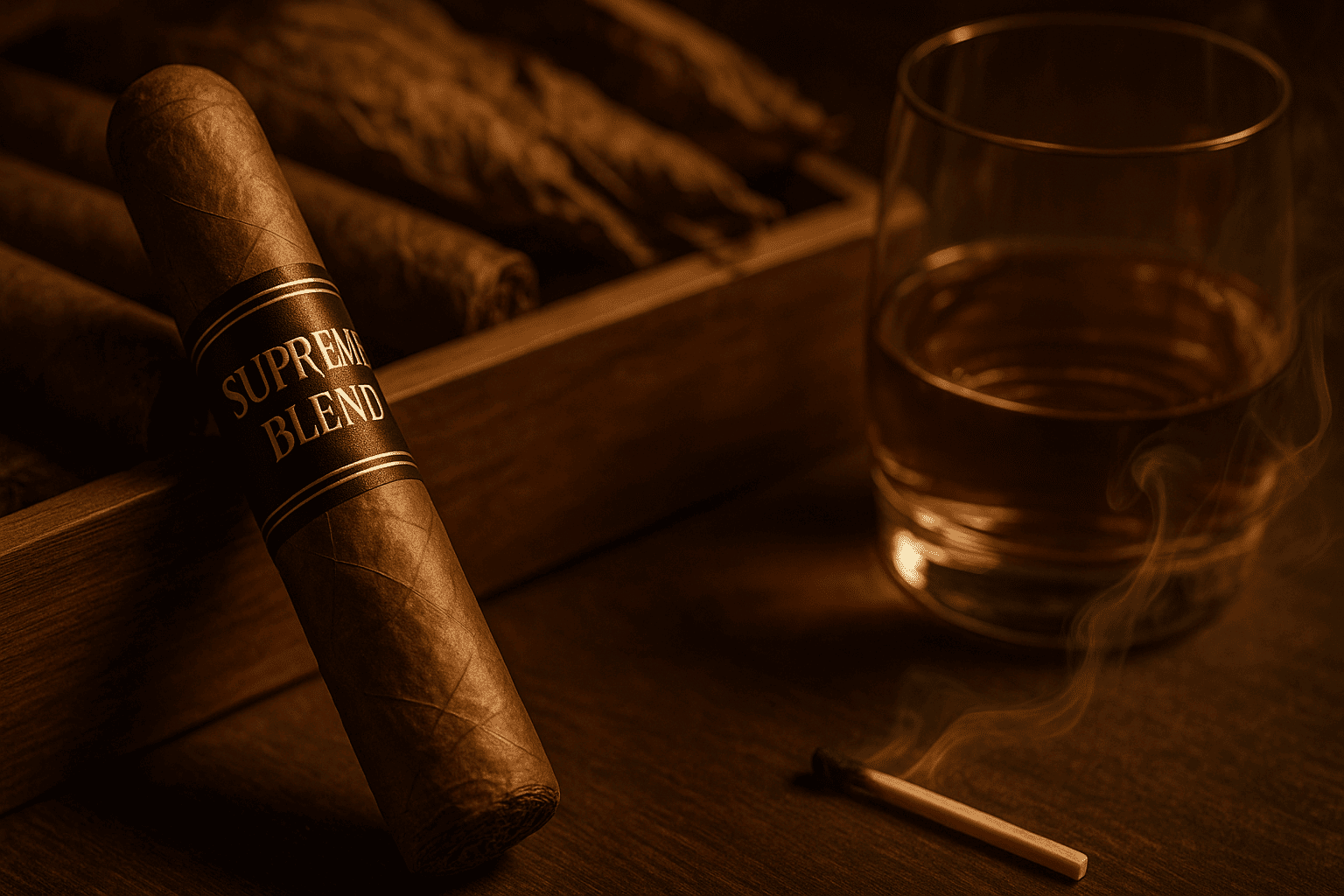
A supreme blend is not defined by strength alone. It is defined by architecture: selection of leaf types, disciplined fermentation and aging, a binder that sustains even burn, and a wrapper that transmits the topmost aromatics without masking the internal dialogue. In market terms the premium cigar segment, which supports flagship expressions, is a significant commercial category—the global premium cigar market was valued at US$12,087.5 million in 2024. Grand View Research — Premium Cigar Market
At the bench, tobacco blending basics begin with an inventory: leaf types sorted by priming, seed, and provenance; an expectation for nicotine delivery and combustion; and a roadmap for the flavor arc. A supreme blend typically uses a layered filler package—combining ligero for backbone, seco for mid-palate complexity, and volado for combustion stability—then dresses that package with a binder and one or more wrappers chosen for how they will color the initial aromatic impression. A careful maker monitors wrapper vs filler differences precisely because the wrapper contributes most to immediate aroma and the filler defines body and evolution.
The wrapper: visual cue, aromatic engine
Wrappers are the façade and the first instrument of flavor. Different wrappers produce distinct signatures that an informed taster uses to set expectations:
- The Connecticut shade wrapper profile tends toward subtlety—cream, light almond, sometimes delicate cedar—valued where a maker wants a soft opening and a refined mouthfeel. Connecticut shade is a common wrapper for supreme blends that emphasize nuance over power.
- Maduro wrapper characteristics bring darker aromatics: molasses, dark chocolate, roasted coffee, and a syrup-like sweetness developed through extended fermentation and, often, deliberate wilting during curing. Maduros lend immediate density to the first draws and shift a blend’s balance toward roundness.
- Habano, Corojo, and Ecuadoran sun-grown wrappers each add distinctive facets—citrus-tinged spice, sun-baked leathery echoes, or earthy floral tones—that the blender uses to color the blend’s top notes.
The wrapper’s visual tone is a shorthand for tasting strategy, but it should not be treated as determinative; wrapper vs filler differences mean that a mild Connecticut-wrapped cigar can hide a surprisingly powerful filler composition, and a Maduro-wrapped cigar can be balanced if the binder and filler temper its sugars.
Seed, place, and the influence of terroir
Seed lineage and cultivation zone determine a leaf’s genetic and environmental potential. The classic contrast of Cuban seed vs Criollo illustrates how genetic stock guides blending choices: Cuban-seed (often called “Habano” in commercial practice) typically carries a peppery, structured potential; Criollo strains—broadly adapted from old Cuban lines—can present varying degrees of sweetness and savory backbone depending on location and selection. For an accessible overview of Cuban-seed definitions see industry notes on Cuban-seed tobacco. Holts — What Is Cuban-Seed Tobacco?
Equally crucial is terroir. How terroir affects cigars is a concrete, measurable process: soil mineralogy (iron, calcium, magnesium), elevation, rainfall patterns, and microclimate alter leaf thickness, oil content, and sugar-to-nicotine ratios. Producers and reviewers trace characteristic differences to place—Nicaraguan volcanic soils produce leaves known for spice and concentration, whereas parts of the Dominican Republic yield smoother, creamier leaf that blends as sweet counterpoint. Practical blending exploits those contrasts: Nicaraguan tobacco strengths provide backbone and pepper, and Dominican tobacco flavor notes contribute sweetness and a polished mid-palate. Detailed commentary on terroir and its effects is available in specialist industry coverage. Cigar Journal — Terroir and Tobacco Flavor
Filler strategy: energy, balance, and burn
A supreme blend’s filler strategy answers three questions: how strong should the smoke be, how long should complexity develop, and how stable will combustion be under real-world conditions. Leaf position (ligero, viso, seco, volado), granularity of leaf selection, and compatibility with the binder create an internal ecosystem. The blender calibrates nicotine output through ligero proportion and manages flavor trajectory via filler origin: Nicaraguan ligero for top-end spice, Dominican seco for softness, Honduran viso for rounded body. Understanding wrapper vs filler differences is essential to avoiding a mismatch—an aggressive wrapper placed over a light, underpowered filler may feel dissonant.
Fermentation, aging, and the aged tobacco flavor impact
Fermentation and aging are chemical sculpting stages. Fermentation reduces ammonia and green harshness while developing aroma precursors; aging allows oils and sugars to harmonize. The aged tobacco flavor impact is commonly described as softened edges, integration of spice and sweetness, and a more rounded mouthfeel. Industry glossaries and technical articles describe fermentation as a multi-stage process that transforms chemical composition and improves palatability when properly controlled. For concise trade guidance on the role of aging and fermentation see Cigar Aficionado’s glossaries and features. Cigar Aficionado — Aging
Recent scientific work on microbial and metabolomic changes during fermentation corroborates that the fermentation stage materially alters flavor precursors and volatile profiles; practitioners use controlled fermentation parameters to develop the target aromatic profile while minimizing harsh byproducts. Representative research on fermentation and flavor development is available in peer-reviewed literature. PMC — Fermentation and Metabolomics Studies
Construction and the mechanics of tasting
Construction translates blend into experience. A supreme blend demands consistent packing density, even draw, and a binder that allows the filler to breathe while maintaining cohesion. A well-constructed cigar produces a steady ash, a stable ember, and an even burn line; these elements preserve the intended evolution. During tasting, methodical practice—clean cut, proper toasting, careful lighting, and measured cadence—reveals the architecture more faithfully.
The practiced taster applies a set of disciplined habits: use the best cigar cutting methods for the vitola; toast the foot to open oils without scorching; apply flame with rotation so that how to light a cigar evenly is observed; and then employ proper cigar draw technique, keeping the smoke mouth-focused and refraining from lung inhalation. These mechanical choices matter because they maintain temperature control in the burn zone and reduce the risk of early acridity.
Flavor evolution: reading the thirds
A supreme blend is designed with the thirds in mind. The first third introduces wrapper-driven aromatics; the second develops filler interplay and texture; the final third concentrates residual sugars, spice, and nicotine.
- First third: Expect wrapper-led notes—vanilla and cream from a Connecticut shade wrapper profile, or cocoa and black coffee from Maduro wrapper characteristics. Use gentle puffs and a modest retrohale to reveal high-end volatile aromatics.
- Second third: Textural elements appear—cedar, leather, baking spice, and vegetal undertones become prominent as fillers assert. Proper cigar draw technique ensures balanced extraction.
- Final third: Intensity consolidates. Slow smoking for flavor and thoughtful cigar puffing rhythm tips prevent overheating and preserve subtle tertiary notes without descending into bitterness. Mindful cigar ash handling tips and maintaining cigar burn line become practical tools to avoid tunneling or canoeing that can obscure the blend’s intended close.
Pairing, presentation, and the context of a supreme blend
A supreme blend is a social instrument as much as a sensory object. Pairings—coffee, aged rum, cognac, or well-structured single malts—should match the cigar’s body and accentuate complementary notes. The rule is balance: let the drink either contrast or echo the cigar’s primary tendencies so that the combination reveals new facets instead of masking them.
Presentation matters: a flagship blend is often marketed in classic boxes and aged in controlled conditions prior to release. Consumers who invest in supreme blends value provenance, production notes, and the ability to cellar examples for future re-evaluation.
Common cigar leaf types and how they are used in supreme blends
An efficient taxonomy of common cigar leaf types clarifies how a blender composes a supreme expression:
- Connecticut Shade: mild aromatics, used for elegant openers.
- Ecuadoran Habano / Cuban-seed wrappers: spice and aromatic complexity.
- Maduro / Broadleaf: sweet, dark, and syrupy top notes.
- Corojo / Criollo: pepper, cedar, and backbone—often used in fillers for structure.
- Nicaraguan / Dominican / Honduran leaves: used in filler and binder roles to balance power and sweetness.
Authoritative glossaries and trade summaries provide concise definitions and usage notes for varietals and wrapper classes for readers who want a technical reference. Cigar Aficionado — Tobacco Typology
Market context and why a supreme blend matters now
The premium cigar market supports high-end, well-crafted blends, and its scale reflects room for flagship offerings: the global cigar and cigarillos market size was estimated at USD 54.79 billion in 2024. Grand View Research — Cigar & Cigarillos Market A supreme blend functions in that market as a brand’s canonical statement—a tangible claim of craft and identity.
Practical checklist for evaluating and buying a supreme blend
- Inspect wrapper condition and cap integrity.
- Evaluate draw and ash on the first third—construction reveals itself early.
- Note evolution across thirds and whether the blend maintains balance.
- Ask about fermentation and aging practices; aged tobaccos frequently display the aged tobacco flavor impact described above. For practical notes on fermentation and aging see trade guides and glossaries. Cigar Aficionado — Fermentation
- Consider provenance and seed lineage: Cuban seed vs Criollo choices influence expected spice and sweetness.
Final Considerations
A supreme blend is a synthesis: seed selection, how terroir affects cigars, fermentation, aging, and craftsmanship each contribute a chapter in the cigar’s narrative. The blender’s task is to assemble common cigar leaf types into a coherent whole—employing tobacco blending basics to reconcile wrapper vs filler differences, to exploit Nicaraguan tobacco strengths as structural pillars, and to use Dominican tobacco flavor notes for polish when appropriate. The wrapper—whether Connecticut shade wrapper profile or Maduro wrapper characteristics—remains the immediate ambassador, while binder and filler choreograph the mid-palate and finish. Practiced technique—best cigar cutting methods, mindful toasting and how to light a cigar evenly, proper cigar draw technique, attentive cigar puffing rhythm tips, occasional retrohale method explained in small doses, slow smoking for flavor, maintaining cigar burn line, and cigar ash handling tips—transforms the bench-made promise of a supreme blend into a reliable sensory journey. In commercial and sensory terms, a well-executed supreme blend validates the maker’s claim: it reveals origin, honors craft, and rewards the patient taster.