
Leaf Cigars by Oscar is an object lesson in modern boutique cigarmaking: a brand born from a retailer’s request and realized through a blender’s craft, wrapped in an immediately recognizable presentation and built around regionally specific tobaccos. The lines carry a visual signature—cigars wrapped in a protective tobacco leaf rather than cellophane, a rustic first impression that gives way to carefully blended interiors—and a practical one: Honduran-grown filler and binder, multiple wrapper offerings, and a palette that ranges from mild Connecticut-style creams to broad, molasses-rich Maduro tones. The brand’s trajectory from a house cigar to an international presence illustrates how blending, presentation, and consistent construction combine to create a distinct proposition in the contemporary market. Cigar Aficionado, HalfWheel
Origin, maker, and the packaging choice
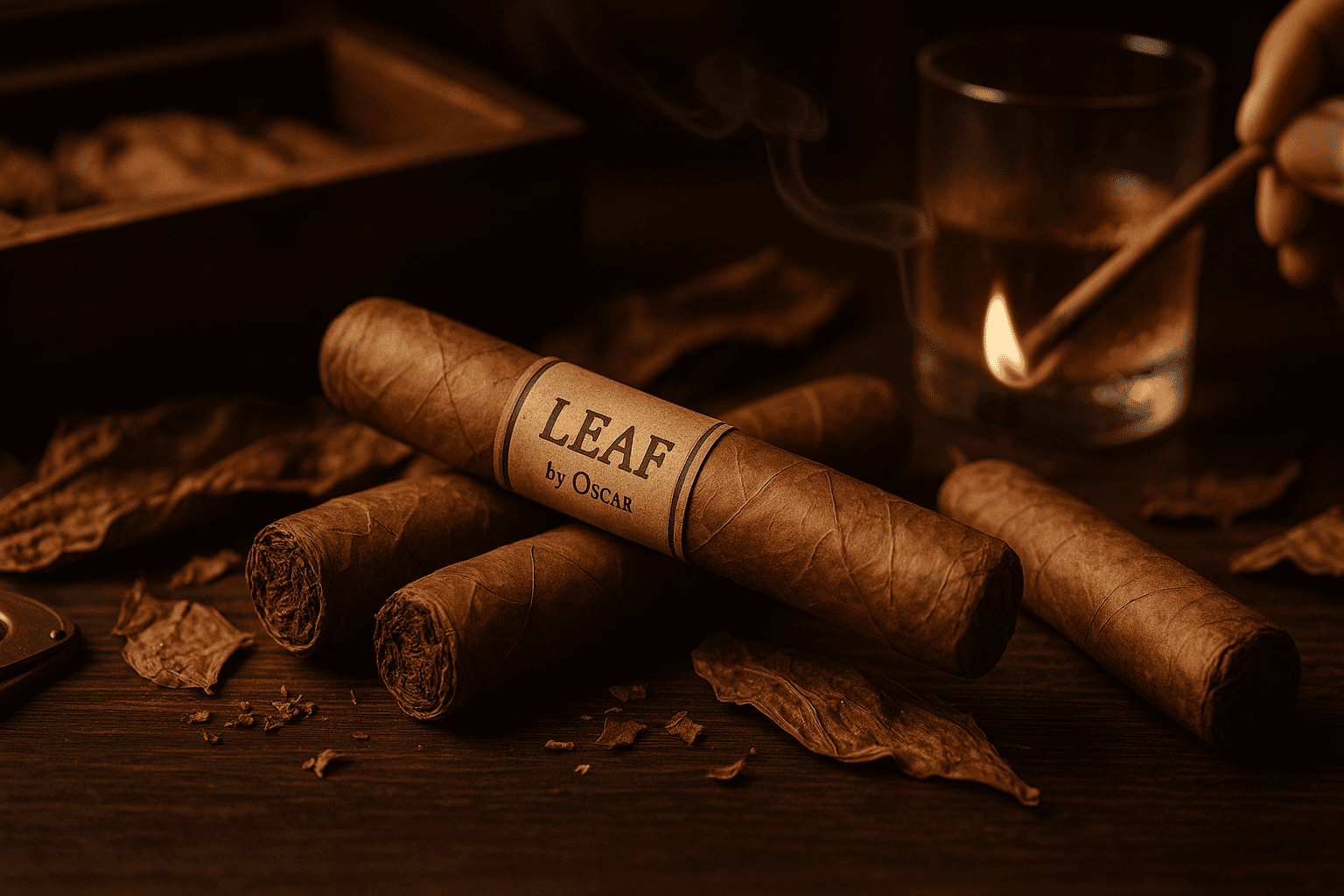
Leaf by Oscar traces to Oscar Valladares working with retailer “Island Jim” Robinson; what began as a house cigar gained momentum and broadened distribution after initial retail success. Valladares and his team produced the cigars in Honduras; the early concept—including wrapping each stick in a tobacco leaf sleeve—was intended as both branding and a slightly ritualized protective layer for the product. The story of the brand’s early adoption—Island Jim ordering sizable initial quantities and the subsequent national spread—appears in editorial profiles and interviews. “I can make a good cigar, not scary,” Oscar has said of his intent to put a product on retail shelves that could sit confidently alongside established lines. Oscar Valladares
That leaf-sleeve presentation is more than marketing: the leaf cover helps preserve the cigar’s humidity during short-term handling, and it communicates authenticity to consumers who value artisanal signals. Reviewers remark on the tactile and visual surprise of removing the sleeve and finding a well-rolled, triple-capped stick underneath—the tactile ritual that precedes tasting.
Blends and line architecture: wrapper choices and profiles
Leaf by Oscar offers multiple wrapper types—Connecticut, Corojo, Sumatra, Maduro, and occasional special editions—each producing a different sensory framework. Paying attention to wrapper selection helps the taster anticipate the cigar’s axis of flavor because wrapper leaves supply a large portion of the immediate aromatics and mouthfeel.
- The Connecticut offerings illustrate the Connecticut shade wrapper profile: delicate, creamy, and emphasizing dairy-cream and mild mocha notes while keeping smoke weight in the mild-to-medium range. Reviews of the Leaf Connecticut describe the smoke as “ultra creamy” with a clean burn and light grey ash, which is characteristic of a careful Connecticut execution.
- In the Sumatra and Corojo releases the blend shifts towards spice and savory accents; the Corojo line often emphasizes pepper, nut, and cedar notes consistent with the variety’s reputation. The Dominican tobacco flavor notes and broader Caribbean lineage appear indirectly in the balance of sweetness and wood-derived spice when fillers include Dominican components in multi-origin blends.
- Maduro wrapper characteristics in Leaf by Oscar’s maduro offerings point toward dark chocolate, molasses, and molasses-tinged coffee. Maduro wrappers are often the product of extended fermentation and darker fermentation tones; reviewers of the Leaf Maduro note a rounded, medium-full presentation with a balance of sweetness and backbone.
The brand’s roster demonstrates wrapper vs filler differences practically: the wrapper shapes first impressions—aroma, immediate flavor—while the binder and filler govern backbone, nicotine delivery, and the evolution across the cigar’s thirds.
Tobacco sourcing, terroir, and varietal identity
Oscar Valladares and his factory source tobaccos primarily from Honduran growing areas, though blends sometimes incorporate leaves from Nicaragua, the Dominican Republic, and other nearby regions. The sensory implications of those origins are consistent with general patterns in tobacco production: Nicaraguan soils and climate correlate with peppery, earthy notes, while Dominican-grown leaves tend to trend toward sweeter, creamier expressions. That broad observation aligns with recognized characterizations of Nicaraguan tobacco strengths and Dominican tobacco flavor notes across contemporary blending practice.
The concept of terroir matters here. How terroir affects cigars is not a metaphorical flourish but a practical filter: soil mineral content, altitude, rainfall, and microclimate all affect leaf thickness, oil content, and nicotine concentration. Tobacco grown in volcanic, mineral-rich soils typically produces broader, spicier profiles; coastal or lowland soils favor subtler aromatic profiles. Evaluating Leaf by Oscar blends requires attention to these regional inputs because Oscar’s approach often plays the Honduran terroir against select foreign fillers to balance power and sweetness.
Seed lineages and technical varietals
Tobacco varieties and seed lines determine genetic potential. The conversation around Cuban seed vs Criollo and other named strains appears in many blending accounts: “Habano” or Cuban-seed types generally convey spice and robustness; Criollo historically refers to a Cuban-origin seed that has been adapted in many regions and can present as sweet, earthy, or nutty depending on location and subsequent hybrids. Leaf by Oscar blends reference these families indirectly through wrapper naming (for example, Criollo or Corojo-blended releases) and through the use of Cuban-seed derivatives grown in Honduras or Nicaragua to achieve specific aromatic profiles. The practical takeaway is that seed lineage sets the starting palette for fermentation and aging to sculpt final character.
Construction, aging, and the role of fermentation
Construction is central to how a blend’s promise becomes an actual tasting experience. Observers consistently praise Leaf by Oscar for tight packing, triple caps, and consistent draw across sizes—attributes that translate into predictable burn behavior, a steady ash, and the capacity to carry both subtle aromatics and deeper mid-palate notes. The brand’s presentation and production protocols emphasize carefully graded leaves and attentive rolling. Reviews mention a firm binder and a mostly even burn, which allows the taster to evaluate aged tobacco flavor impact with clarity rather than noise.
Aging and fermentation transform leaf chemistry: sugar and nitrogen ratios change, oils oxidize and harmonize, and harsh chlorophyll notes mellow. The practical result—the aged tobacco flavor impact—is often perceivable as smoother mouthfeel, rounded sweetness, and integrated spice. Oscar’s blends use fermentation and barrel-style aging to shape the balance between filler strength and wrapper aromatics.
Tasting profile and evolution: a methodical walk-through
Leaf by Oscar cigars reward a methodical tasting approach. A recommended procedure:
- Inspect the wrapper and cap for oiliness and seam integrity; note the visual cues that will inform first-third expectations.
- Apply best cigar cutting methods, choosing a straight cut for robustos and a V-cut when a concentrated entry is desired. A clean cut preserves the cap and avoids unraveling.
- Toast the foot gently—practice how to toast a cigar—then apply flame with even rotation to build a uniform ember (how to light a cigar evenly). This sequence reduces early charring and clarifies aromatic release.
Across the thirds:
- First third: Immediate wrapper-derived aromatics dominate—Connecticut shades will show creamy vanilla and toasted nuts; Sumatra or Corojo will show citrusy spice or light pepper. Use the retrohale method explained sparingly at this stage to detect high-end volatile notes.
- Second third: Fillers assert structure: leather, cedar, baking spice, and, in Maduro examples, dark chocolate and molasses. Proper cigar draw technique ensures balanced extraction and prevents over-extraction of harsh tannins.
- Final third: Concentration emerges; maintain cigar puffing rhythm tips and slow smoking for flavor to preserve nuance and avoid a scorched finish. Observe ash stability and practice cigar ash handling tips—let ash extend to a modest length before gentle removal—and actively maintain cigar burn line if small corrections are needed.
Leaf by Oscar cigars, given consistent construction, will typically evolve predictably through these phases, allowing the taster to read how wrapper choice and filler origin interact.
Line highlights, awards, and critical reception
Several Leaf by Oscar expressions have earned positive critical attention. Reviews from specialist sites and retailers praise the Maduro and Sumatra releases for layered flavor and solid construction; the Connecticut shows a milky creaminess uncommon in some other Connecticut-shaded sticks. The brand’s industry recognition includes awards and regional trophies in recent years for Honduran production, reflecting both retail success and jury-based accolades. Those judgments align with retailers’ broader enthusiasm—Leaf by Oscar moved from house-cigar status to a broad retail footprint in a matter of years.
Common cigar leaf types and where Leaf by Oscar fits
A quick taxonomy helps situate the brand among common cigar leaf types:
- Connecticut Shade: mild, creamy—represented in Leaf by Oscar’s Connecticut releases.
- Sumatra/Habano/Habano-seed derivatives: spicier and citrus-leaning—Leaf Sumatra channels some of these characteristics.
- Maduro/Broadleaf: sweeter, chocolate/molasses—Leaf Maduro is often singled out for those notes.
- Corojo/Criollo/Habano classes: Cuban-seed derivatives and regionally adapted strains that provide pepper, cedar, or sweet-wood depending on terroir—present in the brand’s Corojo and Criollo expressions.
Practical guidance for acquisition and cellaring
Buyers seeking Leaf by Oscar should:
- Source from authorized retailers or the brand’s site to ensure freshness and provenance. The brand’s rapid expansion from a house cigar to multiple retailers means legitimate distribution channels exist nationally and internationally.
- Store cigars in stable conditions. The aged tobacco flavor impact emerges with controlled cellar time; a modest humidor regimen—maintain 65–70% RH and 65–70°F—is adequate for most Leaf by Oscar lines. Monitor flavor development and open individual boxes after several months to track maturation.
Final Considerations
Leaf by Oscar presents an instructive case of modern boutique cigarcraft: a product designed for immediate shelf appeal through its leaf sleeve and rustic presentation, and engineered for repeatable sensory satisfaction through careful blending and consistent construction. The brand’s offerings provide a wide educational field for students of wrapper expression—compare the Connecticut shade wrapper profile next to Maduro wrapper characteristics, note Dominican tobacco flavor notes against Nicaraguan tobacco strengths, and use attention to Cuban seed vs Criollo lineage to inform expectations. Grounded practice—employing best cigar cutting methods, practicing how to toast a cigar and how to light a cigar evenly, adopting proper cigar draw technique, applying cigar puffing rhythm tips, using the retrohale method explained with restraint, and following cigar ash handling tips while maintaining cigar burn line—transforms a visual curiosity into a reproducible tasting journey. Leaf by Oscar’s story, and its blends, reward patient and methodical tasting and hold a clear place among contemporary Honduran production and global boutique offerings.