
Tony Soprano’s cigar is a prop and a character instrument. It sets pace, signals rank, and performs social choreography in quiet gestures: a slow draw, an offered stick, a deliberate hand that rotates ash into a tray. The cigars seen on screen and the cigars associated with James Gandolfini off camera form two intertwined stories — one about costume and narrative, the other about personal taste and industry response. This article surveys the documented brands and lines tied to the character and the actor, explains how construction and technique shape what the cigar actually tastes like, and offers practical tasting notes and ritual guidance that apply to any premium stick. Where assertions depend on reporting, primary trade and editorial sources are cited directly. CAO Sopranos release (Cigar Aficionado), Gandolfini interview & coverage (Cigar Aficionado), industry coverage (HalfWheel)
On-screen evidence and the CAO collaboration
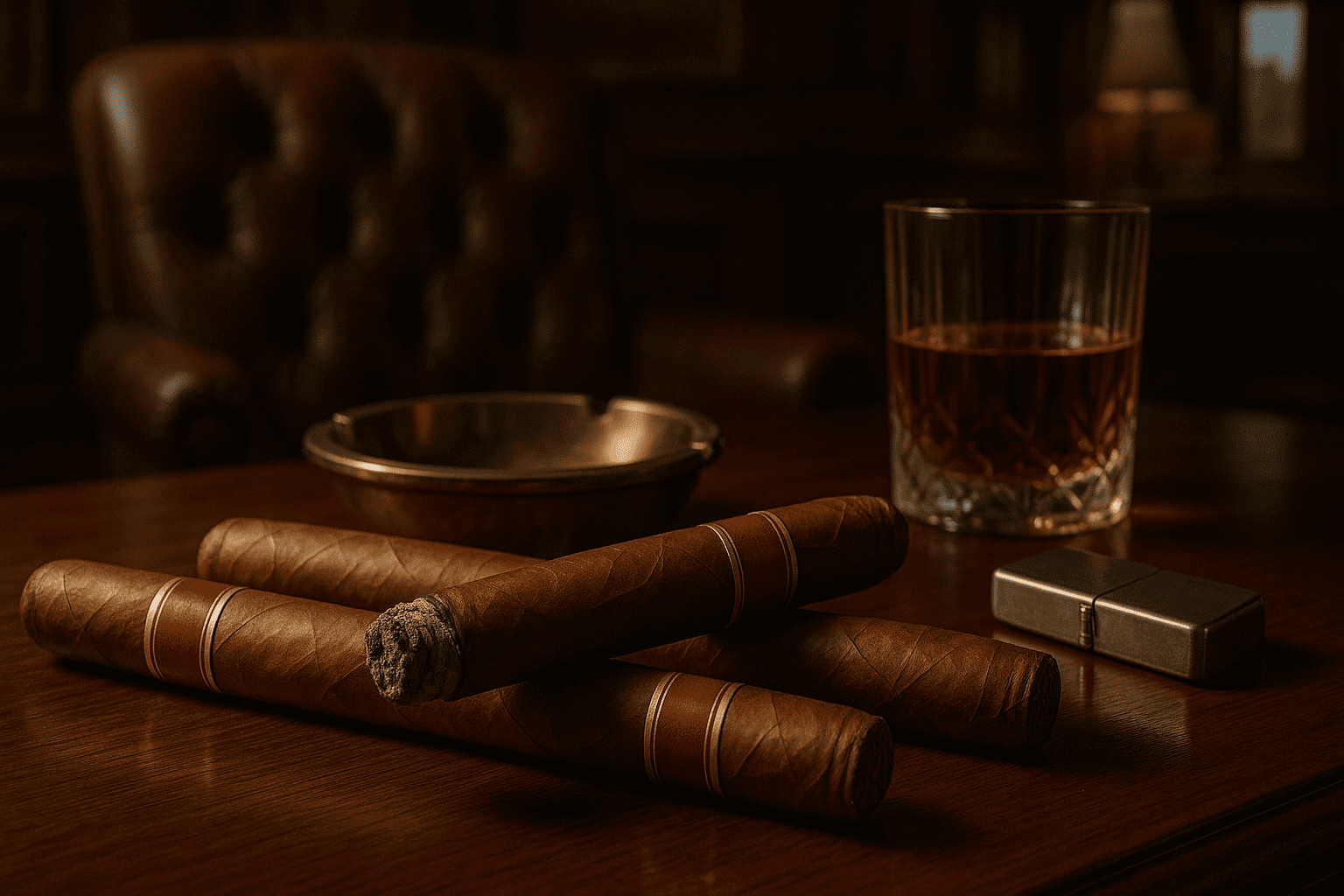
The program used cigars as a deliberate visual language. Production-prop choices and product tie-ins are part of the public record. In 2005 CAO released a Sopranos-branded series produced in Honduras with Brazilian Mata Fina wrappers, Honduran binders, and fillers drawn from Nicaragua, the Dominican Republic, and Colombia. The CAO release included three shapes named for organized-crime ranks, measured and marketed to reference the show’s mythos. The tie-in is documented in industry reporting and product descriptions. Read the CAO–Sopranos account (Cigar Aficionado).
On screen, the cigars presented are frequently large formats and dark wrappers, visual traits that convey presence and duration. Some scenes show recognizable bands and box labels. Trade coverage and cataloging by tobacconists and editorial sites list Montecristo, Partagas-style red-banded sticks, Macanudo, and CAO maduro variants among the visible types. The recurrence of larger ring gauges on Tony’s desk and in framed stills is consistent with cinematic practice: long formats sustain screen time and mirror a character who inhabits patience and deliberation. Industry reporting on the licensed line
The actor’s relationship to cigars
James Gandolfini spoke about his relationship with cigars in interviews and in trade profiles. He described a measured personal habit: “I very much love cigars. I’ll smoke maybe three or four a week. I’ll sit in the same place and not move for 45 minutes.” That remark illustrates how cigars functioned as ritual for him, a temporal container that supported reflection. Gandolfini’s personal preferences contributed to authenticity in performance and to the decision to authorize a CAO-licensed Sopranos offering. Gandolfini on cigars (Cigar Aficionado)
After the series, CAO’s Sopranos line became the most visible commercial echo of the character. The licensed line and later reworkings or recreations (sold under different names when necessary) are part of the product history for aficionados who want a material link to the program. Trade reviews and specialty retailers document both the original release and later derivations, describing the blend and its manufacturing provenance. HalfWheel coverage of lifecycle
Which brands appear most often, and what that implies
Across episodes and promotional material, some brands and visual cues repeat:
- Montecristo: Frequent in scenes where a ceremonial gift or a high-value present is visible. Montecristo’s visual weight and cultural cachet make it a plausible chosen brand for a mob boss figure. Trade and editorial references note Montecristo’s frequent cinematic appearances and its historical status as a gift brand.
- Partagas-style red-banded cigars: Several shots show a red band that aligns with Partagas aesthetic; that brand’s fuller, earthy profile aligns with the visual language of toughness and gravitas. Observers and tobacconists who have cataloged on-screen sticks identify Partagas or similar Havana-styled robustos in the series.
- Macanudo and milder sticks: Seen in some casual social scenes where a milder profile reads as hospitable rather than aggressive. Macanudo is visually recognizable and historically common in hospitality settings.
- CAO lines, including Maduro variants: CAO’s connection to the show is documented; the CAO maduro variants and the licensed series provide the clearest commercial link to the program and its merchandising. CAO Sopranos (Cigar Aficionado)
All on-screen identifications combine direct visual evidence and trade reporting. Some scenes present close-ups that make band identification straightforward; others use generic banding or props that imitate high-status Cuban looks without implying authenticity.
Sensory and construction analysis of likely sticks
A visual cue — wrapper tone, ring gauge, cap style, ash density — implies construction quality and contributes to tasting expectations.
- Wrapper and binder. Oily, dark wrappers suggest Maduro leaves and predict cocoa, molasses, or coffee notes. Lighter Colorado tones predict cedar and cream. A neat triple cap signals professional rolling and fewer cap problems. Construction cues visible in the series indicate many of Tony’s sticks were well-made, with firm binders and consistent roll.
- Ring gauge and length. Large gauges favor extended development across all thirds; larger vitolas present a cooler relative burn temperature per puff when smoked slowly, which supports nuanced tasting. The show’s frequent use of fat ring gauges aligns with a character who is staged to inhabit sustained moments rather than quick smoke breaks.
- Ash and burn track. Long, compact ash reflects even packing; flaky or prematurely dropping ash indicates a fluctuating burn. On-screen, long ash segments and even burn arcs are targeted cinematic choices: a long ash implies care and composure. In live tasting, ash behavior is an index of packing uniformity and a predictor of how a cigar will evolve across thirds.
Tasting phases and technique
A seasoned reader understands that a cigar’s journey unfolds in three broad phases. Technique influences how those phases present.
- First third: Aromatics surface — toast, cream, light spice. How a cigar is toasted and lit influences the opening. Instructional trade guidance emphasizes toasting the foot before direct flame contact, because a patient heat application opens oils without scorching. Practice of how to toast a cigar yields a more consistent first-third profile. Lighting & toasting guidance (Cigar Aficionado)
- Second third: Fillers begin asserting texture and spice; cedar, leather, and pepper often emerge. Consistent draw and maintenance of the burn line preserve the balance. Attention to proper cigar draw technique keeps extraction even and avoids overextraction of harsher compounds.
- Final third: The cigar concentrates; bitterness and char may rise if the ember runs hot. Slow smoking for flavor and careful cigar puffing rhythm tips (a measured draw every 30–60 seconds for many formats) reduce overheating and preserve nuance. Maintaining cigar burn line prevents tunneling and uneven burn, both of which can distort final impressions.
The practical mechanics matter: use of the best cigar cutting methods prevents cap damage that causes angular draws; learning how to light a cigar evenly and toasting properly prevents relights and a rough initial phase; practicing smoking a cigar without inhaling keeps the experience aromatic and mouth-focused. These techniques together maximize fidelity to the tobacco’s architecture.
Ritual, dramaturgy, and social signaling
On camera, a cigar performs social work. A lit cigar is a pause in speech, a punctuation mark in negotiation, and an intimate prop in close-range conversation. Tony’s gestures — offering, lighting for another, letting the ash lengthen — convey authority. Production designers and costume teams selected sticks that visually read at distance and in close-ups: fat sizes, dark wrappers, and clearly banded labels register as power objects in visual storytelling. Trade editors note that the CAO collaboration was a deliberate commercialization of that iconic image. CAO–Sopranos (Cigar Aficionado)
Practical advice for readers who want to approximate the profile
Those who want a sensory proxy for Tony Soprano’s on-screen sticks should prioritize certain attributes:
- Choose medium-to-full-bodied cigars with consistent construction and a well-aged wrapper. Maduro or Colorado wrappers will approximate the dark visual cue used frequently on the show.
- Use the best cigar cutting methods: a straight guillotine for many robustos and toros, a V-cut for a more concentrated entry. Ensure a clean, single-slice cut at the shoulder.
- Toast the foot gently and practice how to light a cigar evenly by rotating the foot above the flame before taking the first measured draws. That routine reduces the need for relights and helps maintain cigar burn line. Lighting guidance (Cigar Aficionado)
- Adopt proper cigar draw technique and a restrained cadence: draw into the mouth, taste, then exhale, avoiding lung inhalation; this is the practiced approach of connoisseurs who use retrohale method explained sparingly to reveal nasal aromatics. Practice small retrohales at first.
- Use cigar ash handling tips: let ash grow to a modest, stable length and tap gently into an ashtray if needed. Excessive tapping disrupts combustion and flavor balance.
Quotes, data points, and anchoring references
Industry reporting anchors several key facts: the CAO Sopranos collaboration and its blend components (Brazilian Mata Fina wrapper; Honduran binder; fillers from Nicaragua, Dominican Republic, Colombia) are documented in trade coverage and product releases. The CAO line’s three vitolas and the year of the initial release register in product literature. CAO Sopranos release (Cigar Aficionado)
James Gandolfini’s own remark about cadence and habit — “I very much love cigars. I’ll smoke maybe three or four a week. I’ll sit in the same place and not move for 45 minutes.” — is recorded in editorial interviews and provides a direct window into the actor’s lived relation to the object. That testimony clarifies why on-screen smoking reads as both a prop and a private pleasure. Gandolfini on cigars (Cigar Aficionado)
Sampling suggestions and matchups
A practical tasting set that approximates on-screen character can include:
- A Maduro or Brazil-wrapped medium-full robusto (for the darker visual and flavor profile commonly associated with mobster imagery).
- A Cuban-style medium-to-full robusto or a reliable non-Cuban Montecristo-styled Churchill for the ceremonial moments.
- A CAO Sopranos or CAO recreation if the object-level connection to the show matters; collectors and specialty vendors document these production variants and reblends. Trade coverage of CAO variants (HalfWheel)
When tasting, follow slow smoking for flavor: measured puffs, attention to ash length, and incremental retrohales when comfortable. These habits preserve complexity and reduce harshness.
Final Considerations
The cigars associated with Tony Soprano occupy intersecting domains: cinematic sign, actor preference, and commercial artifact. The CAO Sopranos release gave a definitive industrial echo to the on-screen image; the actor’s remarks about his own habit give texture to that image; trade and editorial reports provide object-level details that anchor tasting expectations. For the serious taster, the path from sight to palate passes through technique: the best cigar cutting methods, how to toast a cigar, how to light a cigar evenly, and adoption of proper cigar draw technique. Pay attention to cigar puffing rhythm tips, practice the retrohale method explained with restraint, and follow cigar ash handling tips while maintaining cigar burn line. These practices convert a cinematic visual into a reproducible sensory experience and permit the student of the cigar to read what the brand and construction actually convey about origin, fermentation, and blending.