
Gellis Family Cigars is a contemporary boutique brand with roots in a recognized boutique house and a public narrative that stresses family, heritage, and carefully articulated blends. The brand was founded by Kyle Gellis, known for Warped Cigars, and introduced with small, focused lines intended to be accessible while maintaining a clear identity distinct from his prior work. This treatment presents a methodical account of the brand’s origin, factory partners, blend architecture, and the sensory, technical, and ritual practices relevant to evaluating its products. It integrates verifiable statements from primary and trade sources, measured tasting frameworks, and practical guidance for newcomers who wish to sample these cigars with competence and appreciation.
Origins, Positioning, and Early Releases
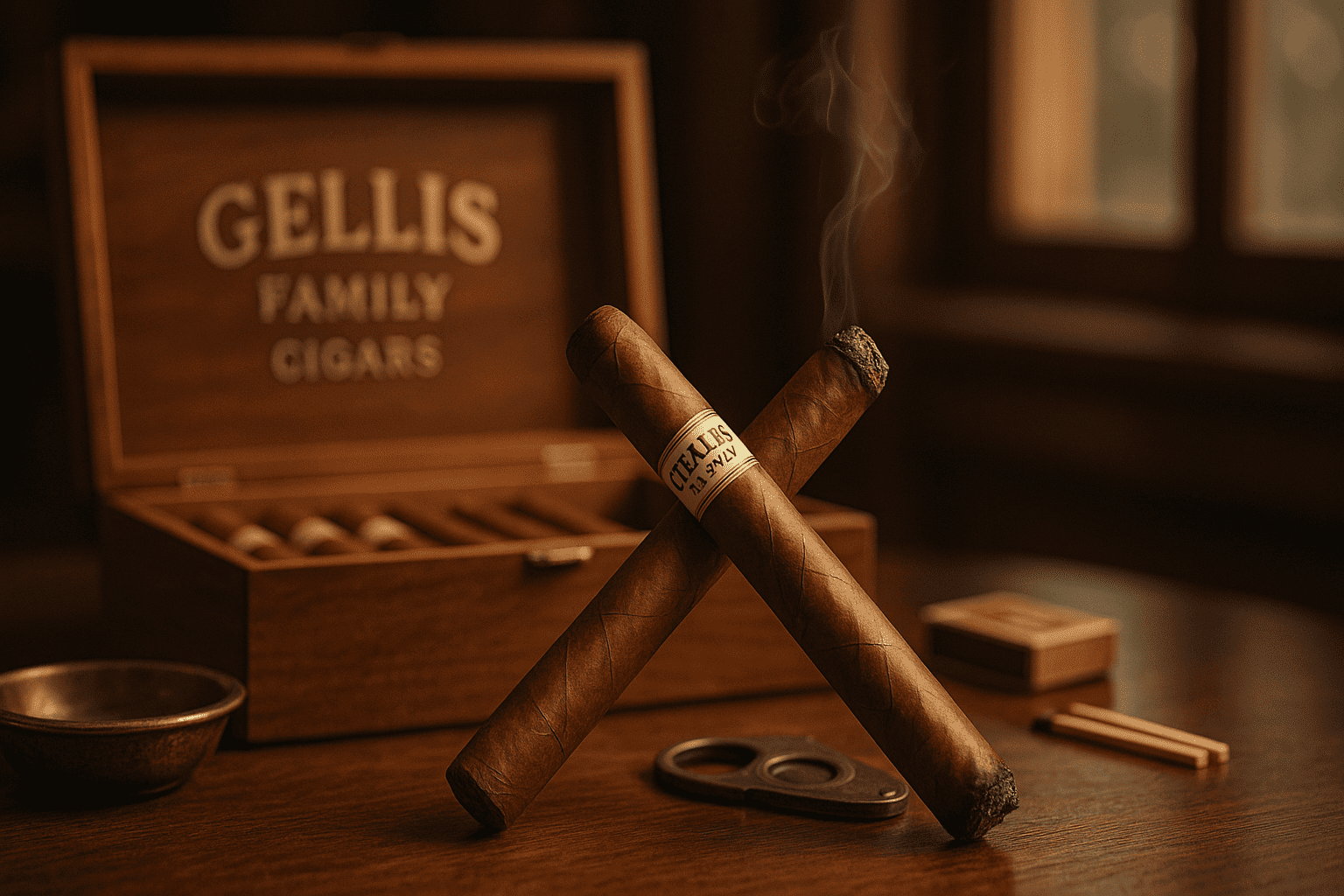
Gellis Family Cigars began as a deliberate new label created by Kyle Gellis after his work with Warped. The brand’s stated purpose is to establish a family-named house with blends that can be passed down, and the company uses the phrase “BEGIN YOUR OWN TRADITION.” as an element of its identity. The initial releases were Marevas and Saunter, both manufactured at Tabacalera La iSLA in the Dominican Republic; subsequent releases include Absolutos (produced in Nicaragua). The founder’s rationale for launching a new imprint was framed in a public interview: “I have been working in the premium cigar industry for 17 years, blending cigars and developing and growing Warped since I was 18 years old,” Gellis says, and the new company provides a platform for lines that do not carry the Warped name. See the brand story at Gellis Family Cigars — Our Story and trade coverage of the launch at Halfwheel — Gellis Family Cigars Launches.
This positioning matters for how the blends are conceived and where they are produced. Marevas is described as built on an Ecuadorian Habano 2000 wrapper with Nicaraguan binder and Dominican and Nicaraguan fillers; Saunter utilizes an Ecuadorian Connecticut-seed wrapper with Ecuadorian binder and Dominican/Nicaraguan fillers, and it is offered in a single robusto size. The brand has also released the Absolutos series, presented as an all-Nicaraguan blend produced at NACSA in Estelí. These production facts are supported by factory attributions and trade reports; such details are central to any technical assessment because factory workmanship, leaf origin, and aging requirements each leave detectable signatures in aroma, combustion, and flavor evolution. See trade reporting at Cigar Aficionado — Saunter Now Shipping and launch coverage at Cigar Aficionado — Gellis Family Cigars Debuts.
Factory Relationships and Blend Architecture
Technical evaluation begins with provenance and manufacturing context. Gellis Family Cigars relies on established Dominican and Nicaraguan manufacturing partners: Tabacalera La iSLA for the initial Marevas and Saunter productions, and NACSA for the Absolutos line. Tabacalera La iSLA (stylized as LA iSLA) is a Dominican facility that produces many boutique blends; NACSA (Nicaraguan American Cigars S.A.) is known for working with contemporary boutique houses and for producing sun-grown Nicaraguan tobaccos rolled in Estelí. The choice of these factories signals intentions at two levels: first, a level of craft competence and, second, access to specific leaf origins—Ecuadorian wrappers (both Habano 2000 and Connecticut seed) and Nicaraguan fillers—that arrange flavor building blocks familiar to modern blenders. See product and factory references on the brand site: Gellis Family Cigars — Our Story.
Blend architecture is deliberately restrained in the early catalog: Marevas and Saunter occupy distinct stylistic points (a Habano-forward, slightly peppered line versus a creamier Connecticut-seed expression). The later Absolutos series positions the brand amid Nicaraguan terroir — sun-grown leaf and a soft box-press format—yielding a denser body and a different combustion profile. The maker’s statements about aging (for example, a year of aging before boxing for Marevas as reported by trade press) are not ornamental but part of the process that reduces raw vegetal notes and stabilizes oils, which in turn affects draw, burn, and flavor continuity. See reviews and product notes such as those on Neptune Cigar — Marevas and retailer descriptions at DROP Cigar Club — Marevas.
A Measured Tasting Framework
To study and report on a cigar line systematically the experienced reviewer uses a consistent framework: visual inspection, cold draw, lighting and first third, middle third, final third, and post-smoke reflections. Each stage elicits different classes of sensory data—visual cues and hand-feel in the cold stage, top notes and palate entry in the first third, development and structural balance in the middle third, and endurance, heat, and finish in the latter third. This article applies that framework to representative Gellis Family offerings and recommends protocols for replicable tasting notes.
Visual and Tactile Inspection
When evaluating a Gellis Family stick, begin by observing wrapper tone, uniformity, vein structure, and the presence (or absence) of oil sheen. An Ecuadorian Habano 2000 wrapper will display a richer, more tannic brown with modest veins and a slight tooth; Ecuadorian Connecticut-seed wrappers read lighter and silkier. The soft box-press used on some Absolutos vitolas affects firm hand-feel—a deliberate press softens the tactile resistance and can compress the filler bunch in ways that change the airflow and burn path. Observing these physical cues gives immediate data about anticipated mouthfeel and probable burn dynamics. See retailer tasting notes and visual descriptions at Kohnhed — Marevas Review.
Cold Draw
A clean cold draw provides early signals: wrapper aromatics, casing remnants, and resistance. A Gellis Marevas cold draw may deliver notes of raw spice, baked earth, and faint leather, while Saunter’s cold-draw often offers creamier, cereal-like aromas aligned with Connecticut-seed wrapper characteristics. A tight or papery cold draw points to low humidity or over-compression in the bunch and predicts potential relights or tunneling. Record the cold draw resistance numerically (e.g., “1 = loose, 5 = tight”) and the primary three aromatic impressions for repeatability.
Lighting: Toast, Ignite, Confirm
How to light a cigar properly matters for the initial flavor arc. Toasting the foot first, then bringing it briefly to the flame while rotating, yields a more even cherry and avoids localized scorching that can produce bitter, charred notes. The brand itself has stated minimum aging periods for some lines; such aging reduces green flavors that might otherwise be emphasized by high-temperature ignition. Initiate small, measured puffs until the ember stabilizes and observe the first puffs for top-note prominence and any off-flavors signaling chemical residues or poor storage. For procedural background see trade comments and launch notes at Halfwheel — Launch Coverage.
First Third (Opening)
The opening third is where a cigar’s declared identity is often most apparent. With Marevas the initial envelope typically reads as firm: a direct, slightly peppered entry that gives way to baked bread, mild leather, and a citrus-like brightness (often attributable to Habano 2000 wrapper compounds). Saunter’s opening is softer: gentle cream, toasted grain, and subtle floral hints allied to the Connecticut-seed wrapper. For Absolutos, expect more concentrated earth, cocoa, and mineral notes tied to Nicaraguan sun-grown leaf—structured and delivering a fuller mouth-coating body. These impressions should be judged against consistent puff cadence (one draw every 45–75 seconds) to avoid overheating and palette fatigue.
Middle Third (Development)
The middle third tests blend integration. A well-constructed Marevas will show integration of Habano spice with the filler’s underlying nuttiness and an evolving savory richness. For Saunter, the middle third should confirm creamy stability and show subtle spice as the binder and filler join the wrapper’s initial impression. If the Absolutos series is soft box-pressed, expect compact smoke density with slow-rise flavors that accentuate mineral and roasted coffee bean notes. A reviewer should note ash texture, burn evenness, and whether the retrohale (done cautiously) reveals additional aromatic compounds. See independent reviews and tasting reports such as those at Developing Palates — Marevas Review and Halfwheel — Saunter Review.
Final Third (Finish)
The last third is often the product’s endurance test: heat management, flavor persistence, and balance under increasing combustion temperature. Some blends tighten or become hotter in the final third; blends that have been allowed sufficient aging and whose tobaccos have complementary combustion curves resist excessive harshness. Observe the finish length, the presence of any top-note regression (a return of initial flavors), and the mouth-drying or numbing effects that signal higher nicotine extraction.
Technical Observations — Construction and Consistency
Construction is central to the usability and sensory outcomes of any cigar. Factory workmanship at LA iSLA and NACSA is generally capable; nonetheless, quality control is not uniform across every production run in the cigar industry. Reported details indicate that Marevas, Saunter, and Absolutos are produced and aged with attention to resting time—elements that limit excess moisture and set combustion behavior. For consumers, the practical measurement is straightforward: a cigar should draw smoothly, burn consistently, and have a cohesive ash. Tactile evaluation of feel and flex is critical: excessive hardness along the body indicates over-pressing; soft spots can predict tunneling.
Sourcing, Terroir, and Leaf Roles
Understanding what is in the package requires precise terminology. The wrapper, binder, and filler each perform discrete functions:
- Wrapper: the visual and olfactory front door of the cigar; it adds oils, immediate aromatics, and tactile mouthfeel. What is a cigar wrapper? It is the outermost tobacco leaf and contributes significantly to first impressions. Ecuadorian Habano and Ecuadorian Connecticut-seed wrappers are present in Gellis Family’s early portfolio and provide contrasted profiles—Habano leaning toward spiciness and oil, Connecticut toward cream and cedar.
- Binder: sits under the wrapper and provides structural cohesion; it also contributes mid-palate support for flavors.
- Filler: the interior blend where body and strength are primarily grounded; Nicaraguan filler often produces mineral and dark cocoa notes, while Dominican filler can bring cream and citric or floral aspects.
Recognizing these roles helps a taster discern why Marevas and Saunter, though from the same house, will present so differently.
Sensory Descriptors and a Beginner Cigar Flavor Guide
For readers building sensory vocabulary, a compact guide helps translate impressions into terms that map to leaf and process:
- Top notes (first puffs): wrapper-driven flavors—cream, cedar, citrus, pepper, floral sugar—often fall here. Saunter typically exhibits softer top notes tied to Connecticut-seed wrapper traits.
- Mid-palate: binder and filler reveal body—nutty, toasty, brown sugar, leather, cocoa. Marevas moves into nut and leather as the filler engages.
- Finish: length and warmth—remaining dryness, spice fade, after-aroma—are diagnostic for nicotine impact and combustion balance.
This simple triage assists novices in recording reliable tasting logs and supports comparative judgment across brands.
Service, Paired Beverages, and Ritual
Cigar service is not merely ceremony; it modulates sensory reception. Clean cutters, warm butane lighters, and deliberate lighting technique protect delicate top notes. Suitable pairings for Gellis Family expressions:
- Marevas: medium-body coffee or a lightly aged rum highlights spice and chocolate undertones.
- Saunter: lighter coffee, creamy tea, or a mellow spirit that respects cream and cereal notes.
- Absolutos: darker roasts, stout beer, or añejo spirits that can stand up to denser mineral and roasted notes.
A restrained ritual—cut, toast, light, and maintain measured cadence—increases discriminatory precision and prevents heat-induced bitterness.
Practical Advice for Newcomers
This section contains actionable, stepwise guidance aimed at readers who are new to premium cigars and interested in sampling Gellis Family products for the first time. Keywords relevant for beginners are integrated as part of direct guidance.
How to Choose Your First Cigar
- Choose a size and wrapper consistent with time available and desired intensity. A Connecticut-seed wrapped robusto (like Saunter’s offered size) generally provides a gentle introduction; Marevas presents a firmer introduction for those who prefer a spicier profile.
- If the goal is to learn tobacco character rather than brand-forward flavor, prefer unflavored, well-constructed sticks; a boutique release like Marevas or Saunter is designed to showcase leaf identity rather than masking with topical sweetness.
- Ask a retailer about box date and recommended cellaring; recent production may still require resting after shipping.
Beginner Cigar Smoking Tips
- Puff steadily and lightly; for most sizes a cadence of one draw every 45–75 seconds preserves balance.
- Avoid deep inhalation; the tasting protocol is mouth-centric—draw into the mouth, note textures and flavors, then exhale.
- Maintain a log: date, vitola, batch (if known), and three descriptor words. This practice accelerates learning and preference formation.
Cigar Terminology for Beginners
A short glossary reduces confusion at purchase:
- Wrapper — the leaf on the outside that sets first impressions.
- Binder — leaf below the wrapper that holds the filler.
- Filler — the inner leaves that form the bulk of flavor and strength.
- Ring gauge — diameter measured in sixty-fourths of an inch.
- Vitola — the factory or traditional name for the shape and size.
How to Cut a Cigar for Starters
Identify the cap and aim toward the shoulder for a clean cut. For many parejo formats a small cut (about 1.5–2 mm) at the cap’s shoulder yields an unobstructed draw without risking wrapper integrity. Guillotine cutters are forgiving; a punch is reserved for larger ring gauges. Practice on inexpensive sticks before attempting prized boxes.
How to Light a Cigar Properly
Use the toast-then-light technique: warm the foot evenly before introducing the flame for a brief moment while rotating to bring the ring uniformly alive. This method honors the blend by reducing thermal shock and minimizing hot spots. Trade sources and retailer educational materials recommend this approach for consistent ignition; see launch reportage and lighting commentary at Halfwheel — Launch Coverage and product notes at Cigar Aficionado — Saunter Now Shipping.
Choosing Cigar Size for Newbies
Smaller ring gauges and shorter lengths shorten session time and limit nicotine exposure. If uncertain, select a 4½–5½ inch vitola with a 46–50 ring gauge to balance duration and mouthfeel.
Cigar Humidification Basics
- Short-term: for holdings under a week, a sealed plastic bag with a 2–3 gram humidity pack calibrated to 62–69% RH will stabilize the stick.
- Long-term: use a well-seasoned humidor and maintain RH in the 65–72% corridor; verify with a calibrated hygrometer. Aging and resting practices (as reported for Marevas’ shipping after a year of aging) reduce raw notes and produce more consistent combustion. For pack selection and seasoning guidance see Boveda — How Many Boveda Do I Need?.
Beginner Cigar Flavor Guide
Learn to parse top, mid, and finish qualities in triage. Document sensations (mouth-coating, acidity, sweetness, spice) and map them back to wrapper, filler, and binder contributions. For Gellis Family’s line, note the contrast between Habano 2000 wrapper-driven spice and the Connecticut-seed wrapper’s cream and cereal timbres.
Commercial and Market Context
Trade coverage and retail inventory choices reflect consumer demand and distribution channels. Gellis Family Cigars debuted publicly at trade venues and leveraged Warped’s distribution channels; the brand’s rollout strategy—targeted boutique retailers, controlled production, and selected sizes—fits a contemporary boutique model in which limited initial SKU counts emphasize quality control and brand narrative. Reviews and retailer listings indicate pricing positioned at the mid-premium price point, with Marevas initially retailing in the low-mid teens and Saunter offered as a single robusto at a suggested MSRP consistent with boutique market positioning. The brand’s retail and trade data should be consulted for precise MSRP and availability by region. See trade reporting at Cigar Aficionado — Debut and product reviews at Kohnhed — Marevas Review.
Industry Signals and Public Health Context
Any treatment of a cigar brand benefits from placing it within broader consumption patterns and regulatory frameworks. National surveillance shows that cigars remain a significant segment of combustible tobacco use: “In 2021, an estimated 8.6 million adults aged 18 and older currently smoked cigars,” a formal CDC report states. At the retail level, convenience stores and similar outlets account for the large majority of cigar sales, which shapes the general public’s access patterns even as boutique brands distribute through specialty tobacconists and selected online retailers. One peer-reviewed retail analysis reported that “90.8% of cigar sales in 2020 occurred in convenience stores,” a fact that contextualizes where most consumers interact with cigar products. These macro facts do not comment on the quality of a boutique line like Gellis Family Cigars but do situate how and where most cigar sales occur, and why boutique houses use limited release strategies to reach the attentive customer. See CDC prevalence data at CDC — Cigar Use in the United States and the JAMA analysis at Delnevo et al., JAMA (2021).
A Measured Purchaser’s Checklist
For buyers intending to sample Gellis Family Cigars, the following checklist helps preserve product integrity:
- Inspect the box date and confirm aging history where available. (Some releases note a full year of aging prior to boxing.) See product notes at Neptune Cigar — Marevas.
- Verify the stated factory and wrapper/binder/filler origins on the band and product page.
- If purchasing a single stick for later consumption, acclimatize with a humidity pack in a sealed bag before placing into a humidor.
- Use a proper cutter and practice a conservative cut technique as described above.
- Light carefully and maintain measured cadence to fully appreciate the intended balance.
Observational Notes from Early Reviews
Independent reviewers and trade press have described the initial Gellis Family releases with attention to wrapper aromatics and integration. Reviews note the Marevas’ Habano-driven pepper and balanced backbone, Saunter’s cream-forward Connecticut-seed character, and Absolutos’ Nicaraguan sun-grown density and box-press silhouette. Trade reviewers also remark on the brand’s modest SKU approach and the family-centered narrative behind the label. These external assessments align with the stated factory origins and the documented aging practices reported in initial product press materials and trade reviews. See halfwheel’s launch coverage and later Saunter review at Halfwheel — Launch Coverage and Halfwheel — Saunter Review, and retailer notes at DROP Cigar Club — Marevas.
Final Considerations
Gellis Family Cigars positions itself as a boutique house that privileges family identity, targeted production, and leaf-driven expressions. From a technical perspective, the brand’s early choices—Ecuadorian Habano and Connecticut-seed wrappers, Dominican and Nicaraguan fillers, and factory partners like Tabacalera La iSLA and NACSA—establish a clear palette and production approach. Sensory evaluation benefits from a structured tasting protocol: visual inspection, cold draw, staged smoking thirds, and careful notation. For newcomers, practical how-to elements — how to choose your first cigar, beginner cigar smoking tips, cigar terminology for beginners, how to cut a cigar for starters, basic cigar etiquette guide, choosing cigar size for newbies, how to light a cigar properly, what is a cigar wrapper, cigar humidification basics, and a beginner cigar flavor guide — convert curiosity into reliable appraisal and a reproducible path for preference development.
The brand’s early releases and trade reception indicate a credible boutique offering that aims to be both accessible and meaningful to consumers who want tobacco-forward profiles with thoughtful production. For the taster who seeks to form an independent judgment, the sensible approach is to sample across the catalog, control environmental variables (humidity, lighting method, and pairing), and systematically record impressions. That method yields the clearest evidence of how the blends realize their intended identities and whether the house’s production practices deliver the promised stability, integration, and aging effects cited in public materials. See the brand site and trade reporting for primary detail and updates: Gellis Family Cigars — Our Story, Halfwheel — Launch Coverage, and Cigar Aficionado — Saunter Now Shipping.